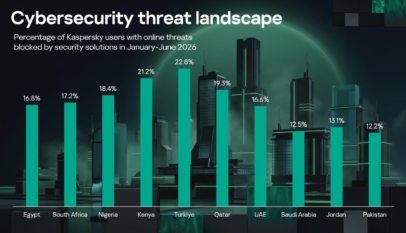


As digital transformation accelerates across industries worldwide, cybersecurity experts are raising alarms over the growing exposure of Operational Technology (OT) systems — the industrial networks that control energy grids, manufacturing plants, and utility infrastructure. These systems are increasingly targeted by cyber adversaries, posing serious risks to national security, public safety, and economic stability.
OT environments include industrial control systems (ICS), supervisory control and data acquisition (SCADA) platforms, and other control networks that manage physical processes. Once largely isolated, these systems are now interconnected with corporate IT networks and the internet, significantly expanding their attack surface and exposure to cyber threats.
Global Threat Landscape: Data Shows Sustained Risk
International cybersecurity data underscores the scale of the challenge. According to the Kaspersky ICS CERT Threat Landscape Report (Q1 2025), approximately 21.9% of industrial automation systems globally detected malicious objects on OT and ICS computers, indicating persistent and widespread probing of industrial environments.
Other international threat intelligence further highlights a rapidly evolving adversary landscape. A recent Dragos OT Cybersecurity Report revealed that the number of ransomware groups actively targeting industrial organizations increased by nearly 60% between 2023 and 2024, with many incidents leading to partial or complete operational shutdowns.
Security vendors have also observed a shift in attack techniques. Reports from Shieldworkz indicate that threat actors are increasingly leveraging automated IoT botnets, remote access vulnerabilities, and wireless exploits to penetrate OT environments — often within hours — by exploiting default credentials and poorly secured remote connections.
Why OT Systems Are Attractive to Attackers
Experts identify several structural weaknesses that make OT infrastructures appealing targets:
- Legacy systems that lack modern security controls such as encryption, authentication, and secure logging
- IT-OT convergence, which expands the attack surface as industrial networks connect to enterprise and cloud systems
- Remote access tools and IIoT devices, creating visibility gaps and unmanaged entry points
Global research further shows that thousands of OT devices remain directly exposed to the internet, many operating on outdated firmware with known critical vulnerabilities. These weaknesses increase the likelihood of exploitation by both criminal groups and state-linked actors.
Geopolitical Tensions and OT Risk
Cybersecurity analysts note that OT environments are increasingly becoming targets in geopolitical and hybrid warfare campaigns. Investigations reported by international media outlets such as WIRED have documented attacks on water utilities, gas infrastructure, and energy control systems intended not merely to disrupt IT services, but to manipulate physical processes and essential services.
This trend underscores a growing concern: OT cyberattacks are no longer theoretical risks but tools of strategic influence and disruption.
Pakistan’s Vulnerability Amid Rising Threats
In Pakistan, public reporting on OT-specific cyber incidents remains limited, but broader indicators point to rising concern. National regulators and cybersecurity bodies have issued multiple advisories urging organizations to adopt international best practices to safeguard critical infrastructure.
Industry data suggests Pakistan’s industrial sector is not immune. According to regional threat statistics referenced by Kaspersky, a significant proportion of industrial control systems in Pakistan encountered cyber threats in 2024, illustrating that malware and intrusion attempts are increasingly reaching non-IT environments.
In response, the Ministry of Information Technology and Telecommunication has initiated revisions to the national cybersecurity framework, engaging international consultants to assess cyber resilience across critical sectors. Analysts note that, if effectively implemented, these measures could strengthen OT and ICS security nationwide.
Security Measures and National Imperatives
Cybersecurity professionals emphasize that protecting OT environments requires a multi-layered, risk-based approach, including:
- Network segmentation to isolate OT from enterprise IT systems
- Continuous monitoring and anomaly detection tailored for industrial protocols
- Compliance with international standards, such as ISA/IEC 62443
- Investment in skilled OT cybersecurity professionals and training
Unlike traditional IT breaches, OT incidents can have direct physical consequences, including power outages, manufacturing shutdowns, environmental damage, and safety incidents — amplifying their national impact.
Broader Cybersecurity Actions in Pakistan
Beyond OT-specific measures, Pakistan has taken broader steps to improve cyber resilience. The Securities and Exchange Commission of Pakistan (SECP) has issued cybersecurity advisories urging organizations to strengthen defenses against escalating digital threats.
Additionally, the introduction of AI-powered cybersecurity platforms, such as Pakistan’s first AI-based security operations assistant, reflects growing domestic efforts to enhance detection, response, and threat analysis capabilities.
However, experts caution that general IT cybersecurity controls alone are insufficient. Effective protection of industrial environments requires OT-specific visibility, asset inventory management, vulnerability assessment, and incident response capabilities aligned with industrial realities.
Why OT Security Is Critical for Pakistan
OT systems underpin Pakistan’s critical infrastructure, including electricity generation, energy transmission, water treatment, fertilizers, manufacturing, and transportation. Disruption in these sectors can cascade into economic instability, public safety risks, and loss of public confidence.
As IT-OT convergence accelerates, once-isolated industrial systems are increasingly exposed to remote exploitation. International organizations such as the World Economic Forum have repeatedly warned that vulnerabilities in critical infrastructure represent one of the most severe global systemic risks, urging nations to prioritize resilience, collaboration, and workforce development.
Looking Ahead: Building Resilience
As Pakistan’s industrial base continues to modernize, cybersecurity leaders argue that OT security must evolve from a technical afterthought to a strategic national priority. This includes investing in industrial security operations centers, developing specialized OT cybersecurity talent, and integrating threat intelligence and incident response capabilities tailored to cyber-physical systems.
Experts stress that the cost of inaction — measured in disrupted utilities, lost productivity, environmental damage, or safety incidents — far outweighs the investment required to secure industrial systems. In an era where digital and physical worlds are inseparably linked, robust OT cybersecurity is not merely a technical requirement, but a cornerstone of national resilience and sustainable growth.
About the Author
Asad Naeem is an industrial automation and OT cybersecurity professional with years of experience in securing and modernizing process industry control systems. He works at the intersection of automation, functional safety, and industrial cybersecurity, focusing on building resilient, reliable, and secure operations