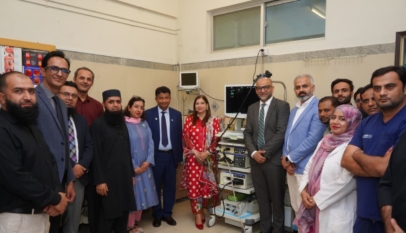

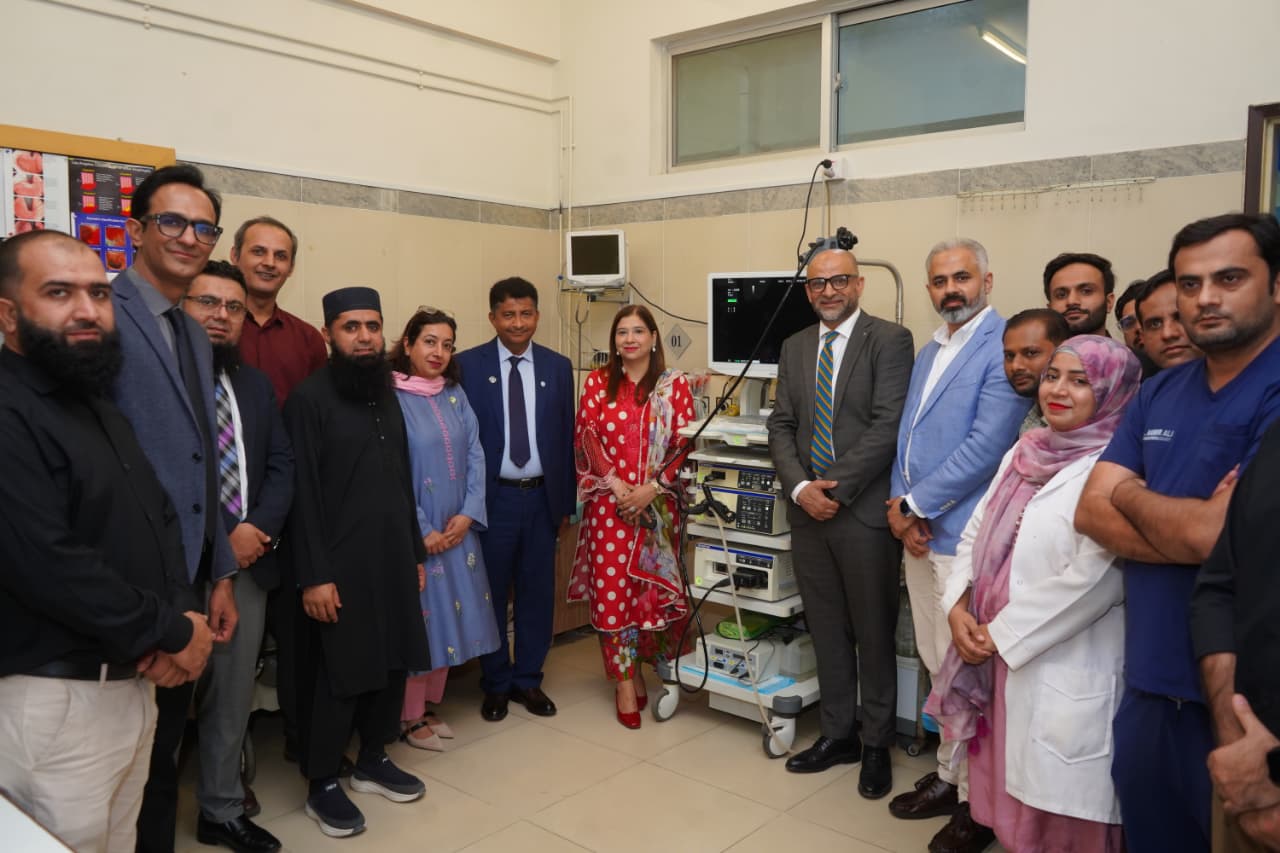
Patients suffering from gastrointestinal cancers and other serious digestive disorders will now have access to advanced diagnostic and therapeutic procedures at the Jinnah Postgraduate Medical Centre (JPMC), which has become Sindh’s second public-sector hospital to acquire an endoscopic ultrasound (EUS) facility.
The sophisticated equipment, worth millions of rupees, has been donated by Getz Pharma following a request from JPMC’s gastroenterology department to the company’s Executive Chairman, Khalid Mahmood, to improve diagnostic services for underprivileged patients from Karachi, interior Sindh and Balochistan.
Hospital officials said EUS-guided procedures, which can cost between Rs300,000 and Rs400,000 in the private sector, would now become accessible to patients free of charge who otherwise struggle to afford specialised investigations.
Endoscopic ultrasound combines conventional endoscopy with high-frequency ultrasound to produce detailed images of the digestive tract and surrounding organs, including the pancreas, liver, bile ducts and lymph nodes.
The technology helps specialists detect gastrointestinal and pancreatic cancers, assess tumour spread, investigate unexplained abnormalities and obtain tissue samples through EUS-guided fine-needle aspiration or biopsy.
It also enables selected therapeutic interventions, including drainage of pancreatic fluid collections, certain biliary drainage procedures and other minimally invasive treatments, potentially reducing the need for major surgery.
JPMC Executive Director Dr Khalid Sher welcomed the addition, saying timely diagnosis remained critical to improving survival among patients with gastrointestinal cancers, many of whom approached tertiary-care hospitals when their disease had already advanced.
He appreciated the contribution of Getz Pharma and expressed hope that the facility would reduce diagnostic delays, facilitate earlier treatment and improve outcomes for patients unable to afford expensive private-sector services.
Head of JPMC’s Gastroenterology Department Dr Nazish Butt said the availability of EUS represented an important advancement in the hospital’s diagnostic and therapeutic capabilities.
“Endoscopic ultrasound allows us to examine abnormalities that conventional endoscopy and other investigations may not adequately characterise. It is particularly valuable for pancreatic lesions, gastrointestinal tumours, suspicious lymph nodes and obtaining precise tissue samples for diagnosis,” she explained.
Dr Butt who is also the chair of endoscopy committee of World Gastroenterology Organization, said EUS-guided biopsies could help establish the nature and stage of malignancies, allowing multidisciplinary teams to determine appropriate treatment without unnecessary delays.
She thanked Getz Pharma Executive Chairman Khalid Mahmood for responding promptly to the department’s request, saying the equipment would particularly benefit patients from financially disadvantaged families.
Getz Pharma Deputy Managing Director Zeeshan Ahmed said the company considered improving access to essential healthcare services an important part of its social responsibility.
He said the company decided to arrange the expensive imported equipment after JPMC gastroenterologists highlighted the difficulties faced by patients requiring specialised diagnostic procedures.
Renowned gastroenterologist Prof. Lubna Kamani, Prof Amanullah Abbasi, head of JPMC’s Radiology Department Prof Shaista Shoukat and officials of Getz Pharma were also present on the occasion.