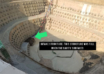


Pakistan Atomic Energy Commission has achieved a major milestone at the Chashma Nuclear Power Plant Generating Station with the successful dome placement of the Chashma-5 (C-5) Nuclear Power Plant.
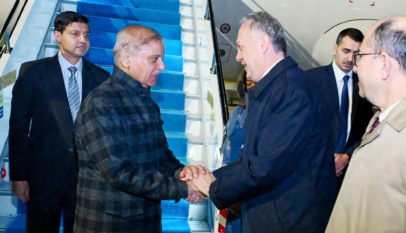
A ceremony in this respect was held in Mianwali today and was attended by Prime Minister Shehbaz Sharif, as Chief Guest, Chief of the Army Staff and Chief of Defence Forces Field Marshal Syed Asim Munir, Chinese and other senior officials and representatives of relevant organisations.
Speaking on the occasion, the Prime Minister appreciated the dedication of engineers, technicians and workers from Pakistan and China who worked relentlessly to achieve the important construction milestone well ahead of schedule.
While highlighting the importance of clean energy, he said that the C-5 project is a manifestation of clean and emissions-free electricity generation in Pakistan.
Shehbaz Sharif commended Chinese partners and said that today’s event reaffirms Pakistan-China All-Weather friendship and unwavering commitment to expanding strategic cooperation in economic, security and development sectors.
The Prime Minister stressed the need to increasingly harness the country’s resources and human capital to build an economically stronger, energy-secure and environmentally responsible Pakistan.
In his opening remarks, the Chairman of the Pakistan Atomic Energy Commission highlighted the vital role of nuclear power in ensuring the country’s energy security by providing reliable and low-carbon electricity.
He said Pakistan’s nuclear power plants are safely and efficiently generating 3,530 megawatts of electricity, helping the country avoid approximately 15 million tonnes of carbon dioxide emissions annually.
He further said that nuclear energy accounts for around 16.6 percent of the country’s total electricity generation despite having only 8.6 percent of its installed capacity. Its contribution to electricity generation increases to 26 percent during winter.
The C-5 nuclear power project will have a generation capacity of 1,200 megawatts and is expected to start electricity generation in September 2030.