

Pakistan and Qatar have underscored the potential for transforming bilateral cooperation in agriculture and livestock into a long-term commercial partnership.
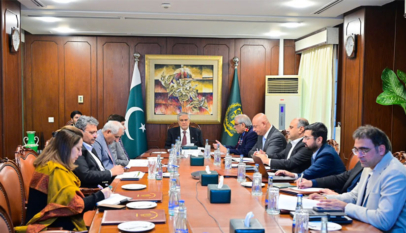
The resolve was expressed during a meeting between Minister for National Food Security and Research, Rana Tanveer Hussain and a delegation of Qatar’s leading Baladna Group in Islamabad today.
During the meeting, the two sides explored opportunities for expanding bilateral agricultural trade, attracting investment and establishing joint ventures in livestock development, dairy production, animal feed and agricultural value addition.
Highlighting the longstanding brotherly relations between Pakistan and Qatar, Rana Tanveer Hussain emphasized the need to translate these ties into stronger economic and commercial partnerships.
Rana Tanveer Hussain proposed engaging the private sector to develop commercially viable partnerships, positioning Pakistan as a potential animal feed supply hub for the entire Middle East.
He also proposed expanding cooperation beyond animal feed exports through joint ventures in integrated dairy and livestock farming, modern slaughterhouses, meat processing, milk processing and packaging, and the production of cheese, milk powder and other value-added dairy products.
The Minister further emphasized the need to increase Pakistani rice exports to Qatar, highlighting the country’s high-quality rice, surplus production and competitive pricing.
During the meeting, the Baladna group delegation identified Pakistan as a potential strategic supplier of animal feed for its expanding international operations.
The group expressed interest in sourcing maize, soybean, alfalfa, Rhodes grass and other forage crops from Pakistan to diversify its global supply chains.
The discussion also focused on emerging opportunities arising from climate change, water scarcity and growing environmental pressures on traditional agricultural and dairy-exporting countries.
The delegation highlighted Pakistan’s potential to produce competitively priced animal feed and dairy products to meet rising demand across Asian and Middle Eastern markets.