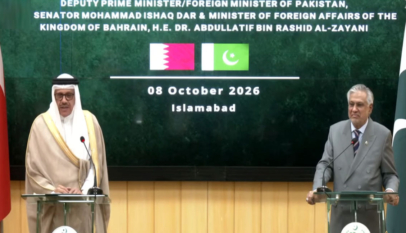

Deputy Prime Minister and Foreign Minister Mohammad Ishaq Dar has said that Pakistan’s approach will continue to remain anchored in the purposes and principles of the UN Charter, respect for international law, and a steadfast commitment to multilateralism.
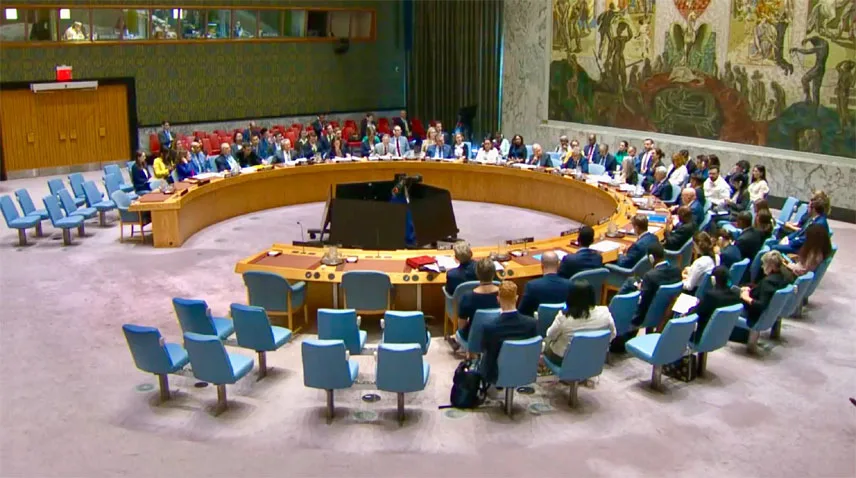
He was presiding over the High-Level Open Debate of the United Nations Security Council on “Promoting International Peace and Security through Multilateralism and Peaceful Settlement of Disputes” in New York on Tuesday.
In his address, the Deputy Prime Minster welcomed the adoption of the resolution by the Security Council tabled by Pakistan on “Strengthening Mechanisms for Peaceful Settlement of Disputes”.
He said pursuing dialogue and diplomacy for the pacific settlement of disputes, in full conformity with the Charter and the expectations of the international community is our collective will.
The Deputy Prime Minister said Pakistan is striving to fulfill the solemn responsibility of Security Council’s Presidency with a deep sense of purpose, humility and conviction.
He thanked all Council members for their positive and constructive engagement with Pakistan’s delegation in achieving this important consensus.
Ishaq Dar said multilateralism is the need of the hour and peaceful settlement of disputes is the lifeline of global stability.
He said geopolitical rivalries, erosion of trust in multilateral institutions, and persistent non-compliance with Security Council resolutions continue to undermine our shared commitment to the maintenance of international peace and security and respect for international law.
He said durable peace is not forged through power projection or unilateralism, but through dialogue, mutual respect and inclusive diplomacy and multilateralism.
Ishaq Dar said Pakistan remains a firm believer in the promise and power of multilateralism as a long-standing member of the United Nations and one of the largest troop-contributing countries to UN peacekeeping.
He said Pakistan’s commitment to peace is principled, enduring, and consistent. He said the Security Council has primary responsibility in peaceful settlement of disputes, but we continue to witness the persistence, and proliferation of unresolved conflicts, many of which remain on the Council’s agenda for decades.
Mohammad Ishaq Dar said the ongoing tragedies in Palestine and the Indian illegally occupied Jammu and Kashmir are vivid examples of this malaise.
He said the prolonged suffering of the Palestinian people, particularly in Gaza, remains a stark reminder of the urgent need for a just and lasting solution.
He said Israel’s latest onslaught in Gaza has killed over 58,000 Palestinians, mostly women and children. He reiterated the call for an immediate, unconditional and permanent ceasefire in Gaza and across the occupied territory which must serve as a stepping-stone for a broader and durable peace.
The Deputy Prime Minister said Jammu and Kashmir remains one of the oldest disputes on the agenda of the UN Security Council being an internationally recognized disputed territory, the final disposition of which is to be made in accordance with the relevant UN Security Council resolutions and the wishes of the Kashmiri people.
Pouring light on the 65-year old Indus Waters Treaty between India and Pakistan, Ishaq Dar said the treaty is a noteworthy example of dialogue and diplomacy working for peacefully arriving at a water sharing arrangement between two neighbours.
The Treaty has withstood periods of trials and tribulations in bilateral relations. It is most unfortunate and regrettable that India has chosen to illegally and unilaterally hold this Treaty in abeyance on baseless grounds, with the intention of withholding the flow of water to 240 million people of Pakistan, who rely on it for their livelihood and survival.
He urged the need to revitalize trust in the UN system that requires ensuring equal treatment of all conflicts based on international law, not geopolitical expediency.
The Security Council’s resolutions must be implemented universally and without discrimination.
He said the debate must serve as a collective reaffirmation of our faith in multilateralism, a recommitment to the peaceful settlement of disputes, and a solemn promise to those who look to this Council not for words, but for action.