
The National Disaster Management Authority and other government institutions are constantly in touch with the provincial governments to coordinate relief and rehabilitation efforts in the flood-affected areas.
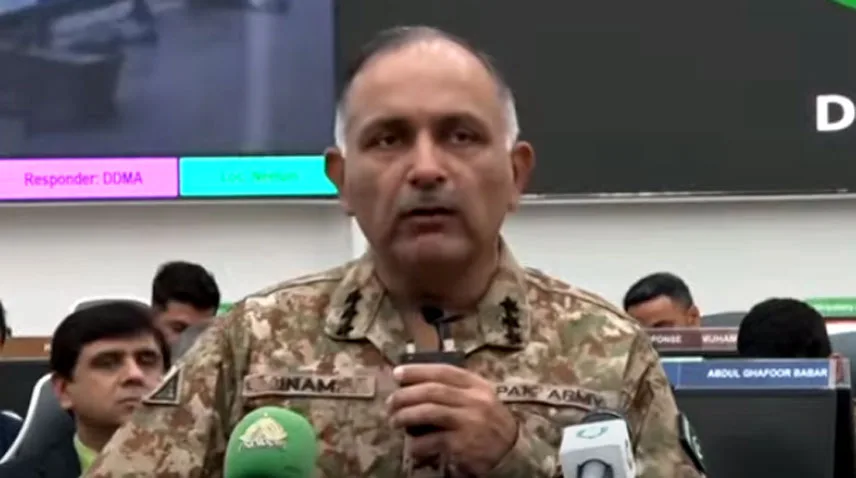
At his media briefing in Islamabad on Sunday, Chairman National Disaster Management Authority, Lieutenant General Inam Haider Malik said concerted efforts are being made to immediately restore the connectivity that has been cut off in Gilgit-Baltistan and Khyber Pakhtunkhwa due to damaged bridges and roads.
He said as per the directives of the Prime Minister, a relief consignment will be immediately dispatched to all districts that have experienced significant loss of life and where people have been dislocated from their homes.
The package will include rations, medicines, and tents.
The Chairman NDMA said the seventh monsoon spell, currently affecting various regions across the country, is expected to continue till 22nd of this month.
He said a subsequent weather system will enter the country from the 23rd of this month and will continue until the 30th of this month, bringing more intensified rains. He said these monsoon spells will remain unleashing downpour in different areas of Pakistan till the first 10 days of the next month.
The Chairman NDMA said day-to-day communication infrastructure, roads, and bridges will be repaired on a priority basis once the monsoon is over.
Earlier, officials of NDMA briefed the media that the authority has developed a detailed monsoon contingency plan, highlighting the areas at greatest risk.
The briefing said northeastern parts including Azad Jammu and Kashmir, central Khyber Pakhtunkhwa, and southeastern areas such as Tharparkar, Sujawal, Tando Allah Yar, Tando Muhammad Khan, and Badin are expected to receive heavier rains.
It was briefed that three major weather systems are converging over Pakistan, which will further intensify the monsoon activity.
They said more than three hundred forty people have lost their lives due to flash flooding and land sliding in Khyber Pakhtunkhwa.
The NDMA officials said most vulnerable areas are the northern regions of Pakistan, northeastern Punjab, Salt Range, southern Punjab, Malakand and Hazara divisions of Khyber Pakhtunkhwa, and central Balochistan.