
By Akhtar Ali Khan
The return of the Afghan Taliban to power in August 2021 marked a major shift in the regional security landscape. Following the withdrawal of United States and NATO forces and the fall of Kabul, the Taliban publicly pledged that Afghan territory would not be used to threaten the security of any other country. These assurances were particularly significant for Pakistan, which has long faced security challenges posed by Tehreek-e-Taliban Pakistan (TTP), an armed militant group responsible for numerous attacks inside the country.
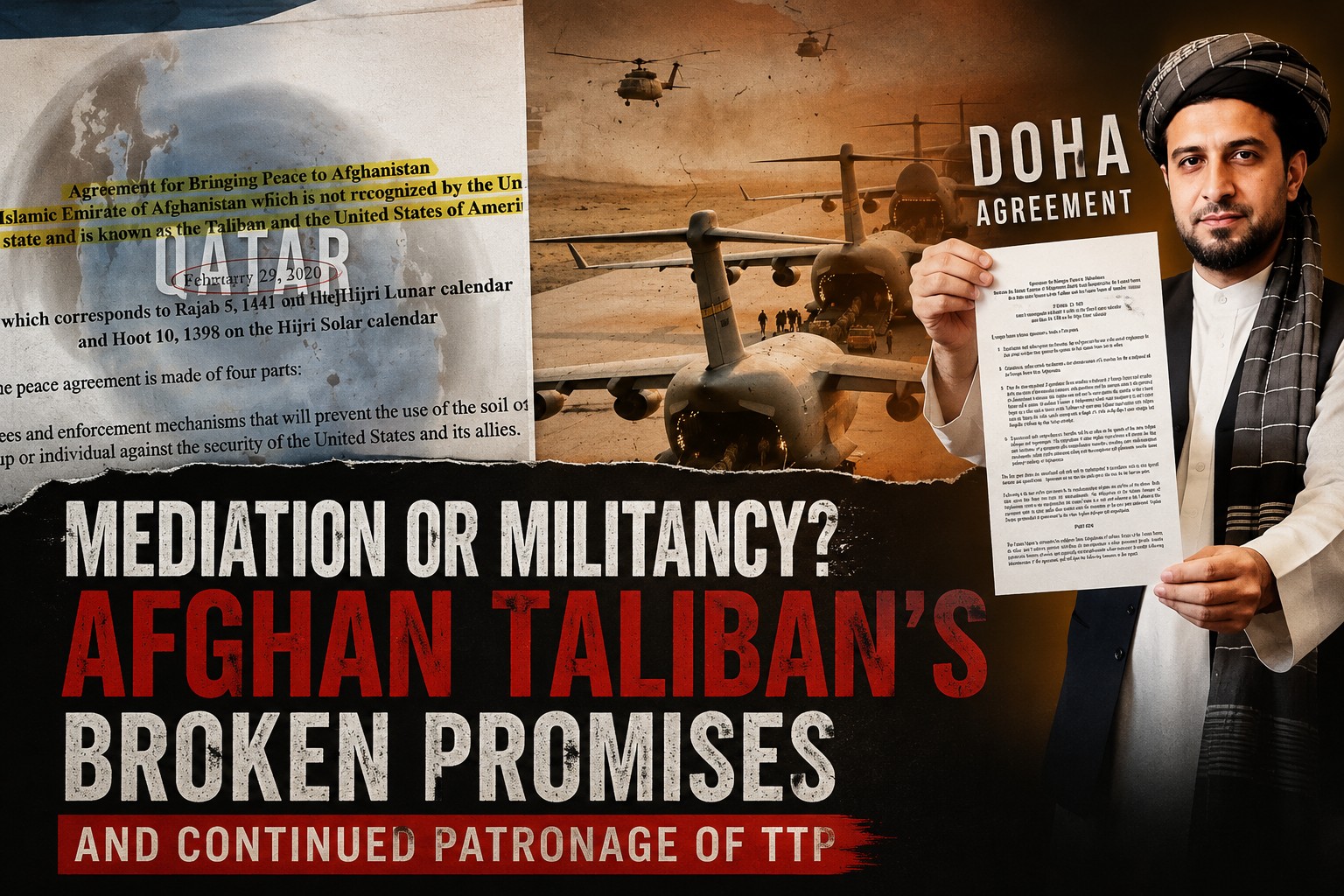
The Taliban’s commitments echoed provisions contained in the Doha Agreement signed between the United States and the Taliban on 29 February 2020. Under the agreement, the Taliban undertook to prevent any individual or group, including al-Qaeda, from using Afghan soil to threaten the security of the United States, its allies, or other countries. After assuming power, Taliban officials repeatedly reiterated that Afghan territory would not be allowed to serve as a base for attacks against neighbouring states.
In November 2021, Taliban representatives reportedly assured Pakistan that action would be taken against TTP factions unwilling to participate in reconciliation efforts. Those assurances were viewed as an important step towards addressing Pakistan’s growing security concerns and improving bilateral cooperation.
However, the security situation has remained a source of concern. Successive reports by the United Nations Security Council’s Analytical Support and Sanctions Monitoring Team have continued to describe the presence of TTP fighters in Afghanistan. The reports have also stated that the group’s operational capabilities increased following the Taliban’s return to power and that it continued to carry out attacks against Pakistan, including cross-border operations.
The UN monitoring reports have further indicated that senior TTP figures were believed to be operating from Afghanistan and that the organisation continued to maintain logistical and support networks inside the country. Security analysts have also linked the release of prisoners following the Taliban’s takeover—including individuals reportedly associated with militant organisations—to the resurgence of TTP activities.
Pakistan has repeatedly maintained that militant groups, particularly the TTP, continue to use Afghan territory to organise and launch attacks against Pakistani targets. Islamabad has urged the Afghan authorities to take effective action against these groups in accordance with their international commitments. The Afghan Taliban, however, have consistently rejected these allegations, insisting that they do not permit Afghan soil to be used against any neighbouring country and denying that they provide support or sanctuary to militant organisations targeting Pakistan.
The contrast between the Taliban’s public commitments and the findings contained in successive UN monitoring reports has continued to generate debate among regional security experts. While the Taliban maintain that they remain committed to preventing threats from Afghan territory, international monitoring bodies and Pakistani officials have continued to express concern over the presence and activities of TTP inside Afghanistan.
Regional analysts argue that durable peace and stability will ultimately depend on credible and verifiable measures against all terrorist organisations, regardless of ideology or affiliation. They contend that effective counter-terrorism requires not only public assurances but also practical action to dismantle militant networks, eliminate safe havens, and prevent cross-border violence. As security challenges persist, the issue remains central to relations between Pakistan and the Afghan Taliban, with regional and international stakeholders closely watching developments on the ground.