
Hardly 20 percent of newborns in Pakistan are breastfed within their first hour of life, while inadequate support from families, health facilities, workplaces and the wider society deprives many infants of mother’s milk, raising their risk of death by up to 15 times, health experts said on Tuesday.
An estimated 33,700 child deaths in Pakistan each year are attributable to inadequate breastfeeding, with diarrhoea and pneumonia among the principal preventable causes, according to data presented at the workshop.
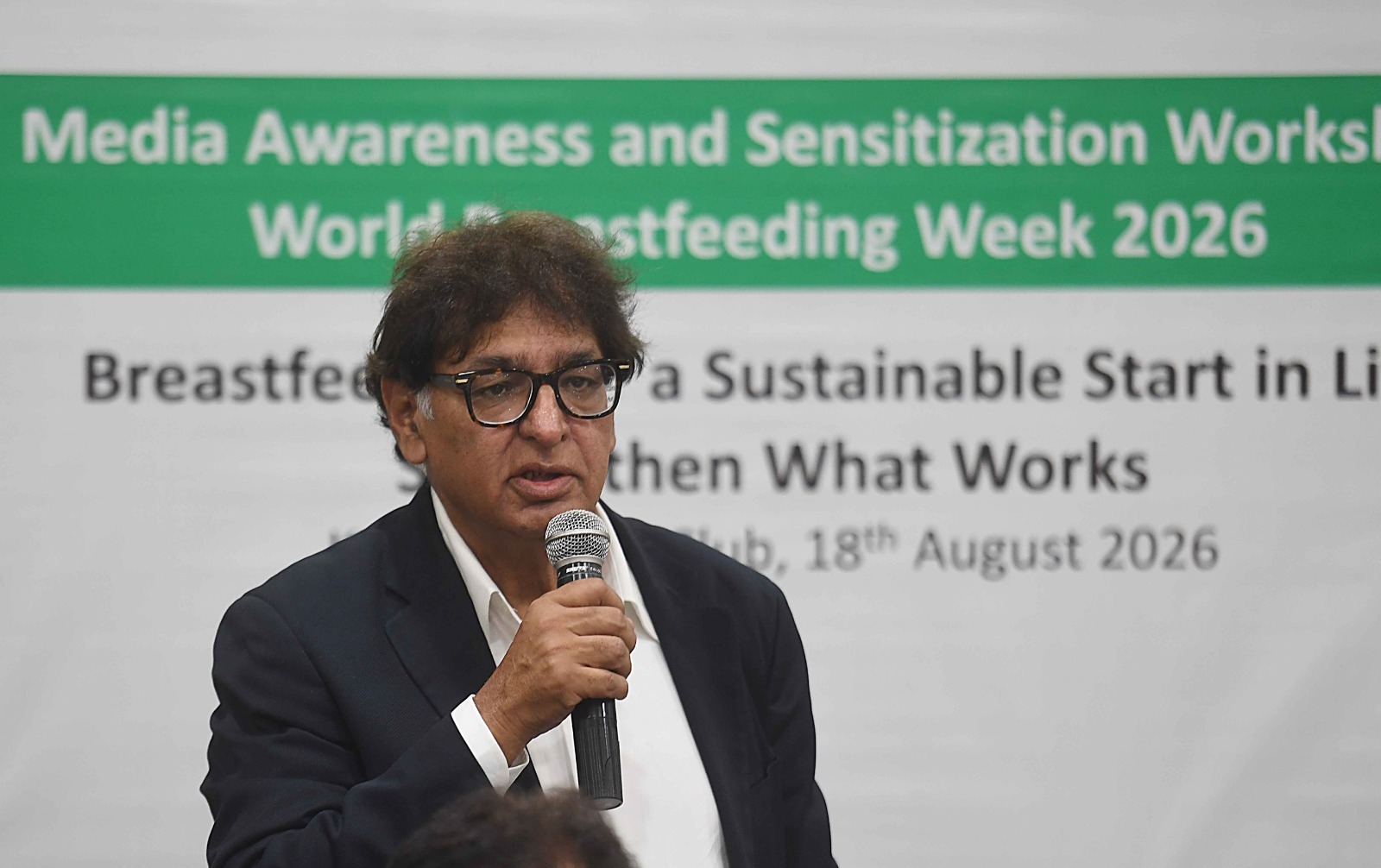
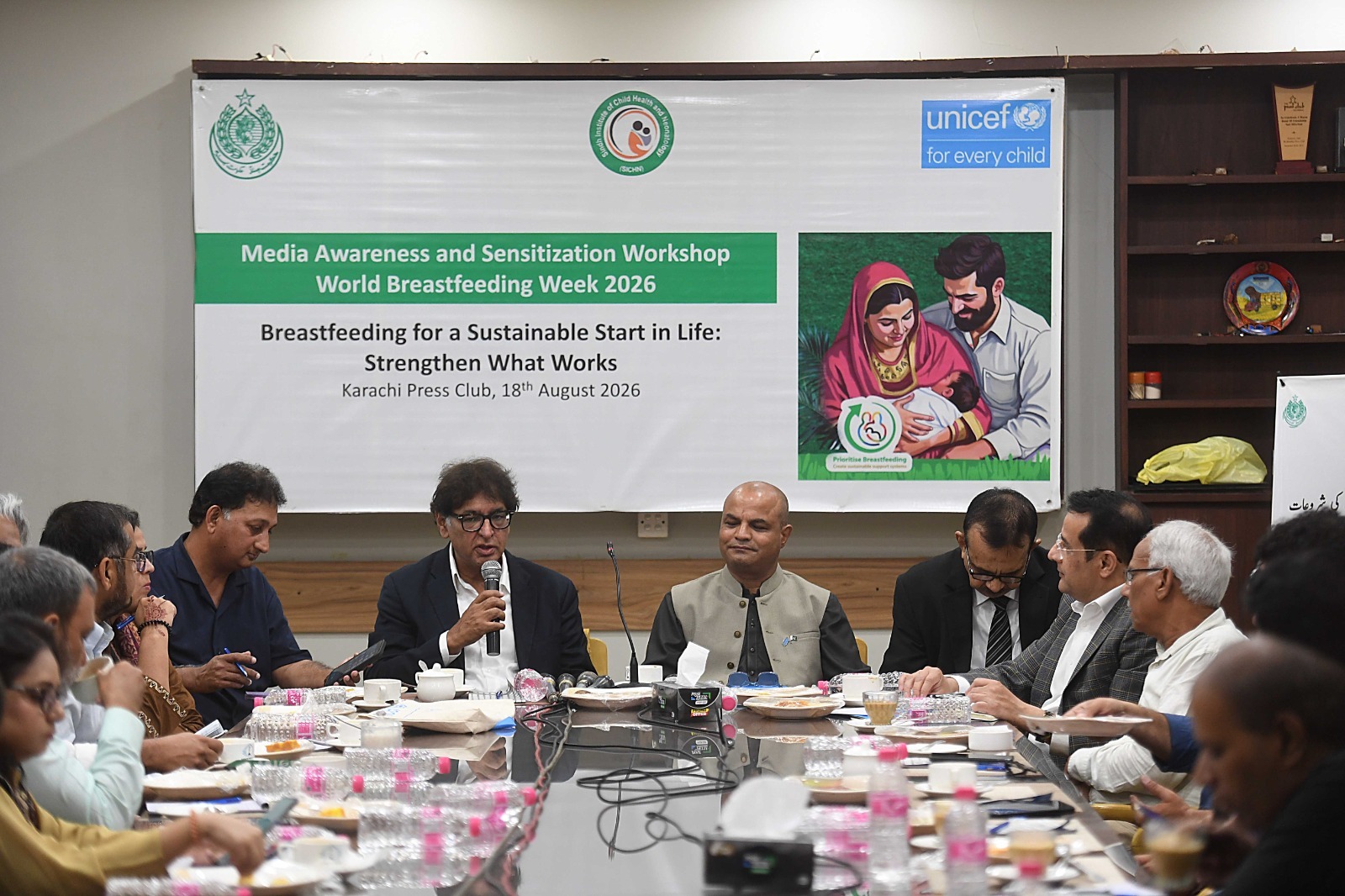
The figures were shared at a media awareness and sensitisation workshop organised by the Sindh Institute of Child Health and Neonatology (SICHN), in collaboration with UNICEF and the Sindh Health Department, at the Karachi Press Club in connection with World Breastfeeding Week 2026.
Prof Syed Jamal Raza, Executive Director of SICHN, said breastfeeding was not solely a mother’s responsibility and called for practical support from fathers, grandparents, doctors, nurses, employers, community leaders and policymakers.
He said infants under six months who were not breastfed faced an estimated 15 times higher risk of death than those who were exclusively breastfed, while partially breastfed infants faced about three times higher risk.
Only 48 percent of Pakistani infants under six months are exclusively breastfed, according to National Nutrition Survey and UNICEF country-profile data cited in his presentation, leaving more than half without the full nutritional and protective benefits of mother’s milk during a particularly vulnerable stage of life.
The SICHN chief said bottle-feeding among children under two had increased from 32 per cent in 2006-07 to 41 per cent in 2012-13 and 48 per cent in 2024, according to pooled regional data presented at the workshop.
He said bottle feeding could expose infants to contamination and infection where safe water and hygienic preparation were not assured. Improper dilution could also result in inadequate nutrition, while other inappropriate feeding practices could create health risks.
Prof Raza’s presentation estimated that low breastfeeding was associated with annual economic losses of about $2.8 billion in Pakistan, while spending on breastmilk substitutes exceeded $888 million a year.
It projected that raising exclusive breastfeeding coverage from around 48 per cent to 60-70 per cent could avert between 7,600 and 14,100 child deaths annually and prevent 1.5 million to 2.8 million diarrhoea cases a year.
He said newborns should be put to the breast within an hour of birth and should receive only breastmilk for the first six months, without water, formula milk or other food unless medically indicated. Breastfeeding should continue up to two years or beyond alongside appropriate complementary food.
Dr Muhammad Khalid Shafi, who briefed participants on the Sindh Protection and Promotion of Breastfeeding and Young Child Nutrition Act, 2023, said the law was intended to protect breastfeeding and regulate the promotion of designated breastmilk substitutes for young children.
He said the law extended protections to products intended for children up to 36 months and restricted direct promotion, cross-promotion, sponsorship and certain contacts between businesses dealing in designated products and health professionals or the public.
Dr Shafi said complaints of alleged violations could be processed through the mechanisms envisaged under the law and its rules. He added that the Infant and Young Child Nutrition Board would have responsibilities for implementation, monitoring, complaint handling and decisions on warnings or penalties in accordance with due process.
Prem Bahadur Chand, Chief of UNICEF’s Field Office for Sindh, said misinformation, social pressure and weak support systems often prevented mothers from breastfeeding optimally. He urged journalists to ensure consistent, accurate and sensitive reporting on the subject.
Prof Dr Halima Yasmeen, Chairperson of Obstetrics and Gynaecology at JPMC/JSMU, said women required counselling before and after childbirth, as well as support from their families and employers. Dr Mazhar Iqbal of UNICEF highlighted the need for a “warm chain” involving health workers, families, workplaces and communities.
M. Waqar Bhatti, senior health and environment journalist, who moderated the discussion, said sustained reporting could help make breastfeeding support a public-health priority.