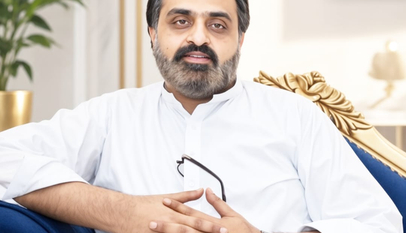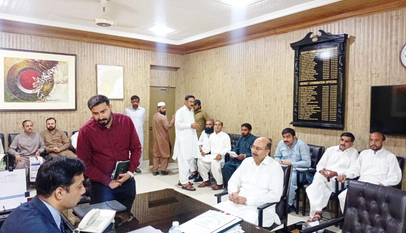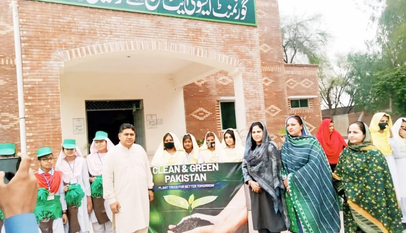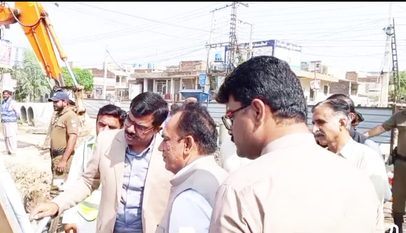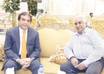

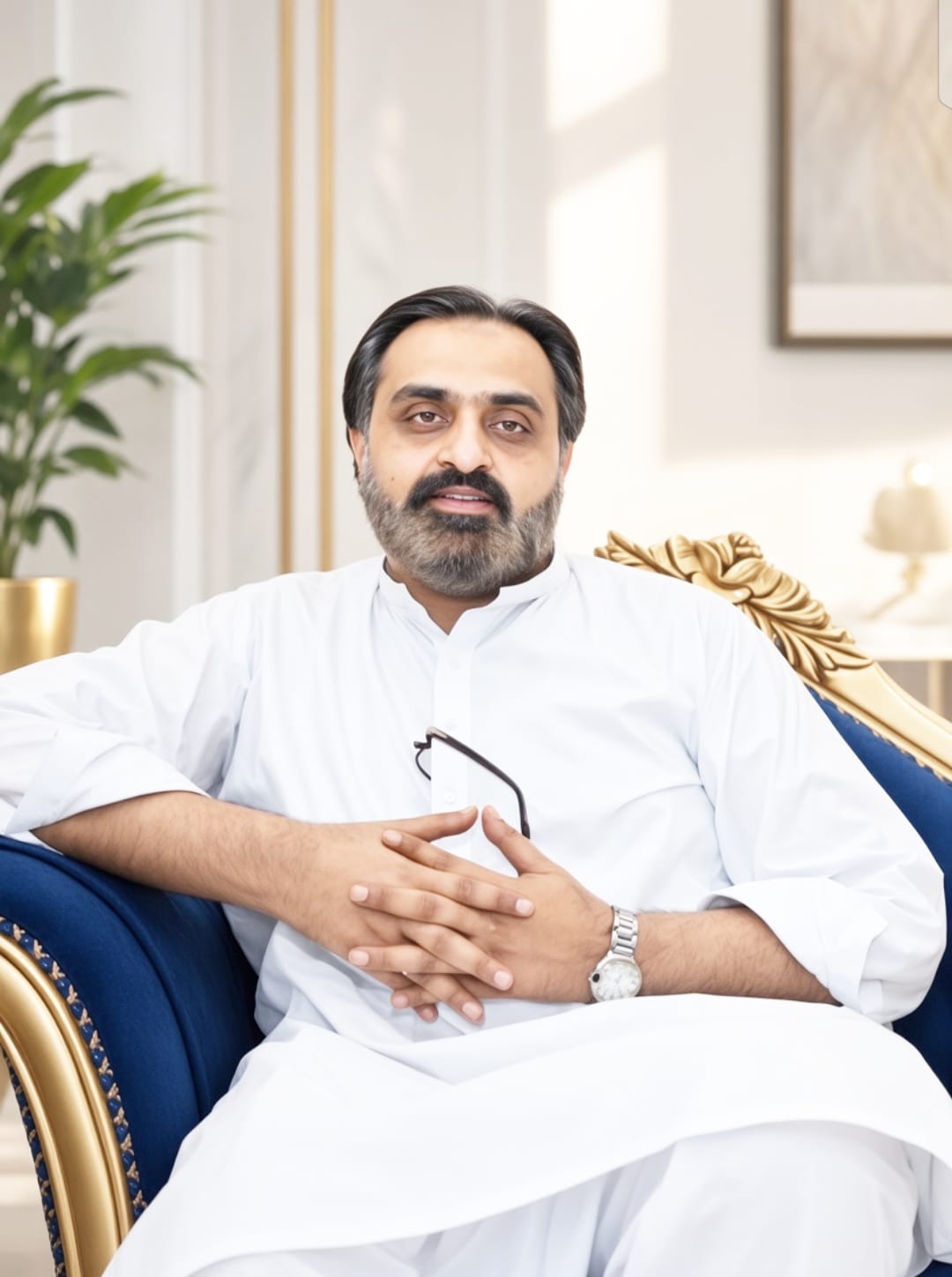
The Sial family holds a prominent place in the political, spiritual and social history of Basti Sialan. The family has not only carried forward its spiritual traditions but has also established a distinct identity in public service and politics. Among the distinguished members of this family is Sahibzada Ghulam Nizamuddin Sialvi, whose personality reflects a combination of family upbringing, religious awareness, political experience, a composed temperament and a strong connection with the people.
Sahibzada Ghulam Nizamuddin Sialvi is the eldest son of former Provincial Auqaf Minister Sahibzada Ghulam Nasiruddin Sialvi. He was born on October 9, 1980. Despite growing up in a prominent family, his upbringing was not limited to comfort and privilege. From an early age, he was introduced to practical life, public interaction and political affairs. His father would often take him along to political gatherings and community meetings held at the family dera. Once, young Ghulam Nizamuddin asked his father why he remained so actively engaged in these activities. His father replied that they might not live to see the day, but this experience and training would one day prove useful to him. Time proved that this was not merely a father’s wish but the foundation of his future political journey.
After completing his intermediate education, Sahibzada Ghulam Nizamuddin Sialvi completed the Shahadat-ul-Alamiyah course, bringing together religious education and political training in his personality. In 2008, he contested the provincial assembly elections for the first time on a Pakistan Muslim League-Nawaz (PML-N) ticket and won the election. This victory became an important milestone in his political career.
As a Member of the Provincial Assembly, he focused on the development issues of his constituency. Following the death of his father, he also played a role in reorganizing the Sialvi political group, which had become fragmented. During this period, he received guidance and support from his elder uncle, the late Khawaja Muhammad Hamiduddin Sialvi, the spiritual successor of the shrine. Khawaja Muhammad Hamiduddin Sialvi’s statement, “My political party is Ghulam Nizamuddin,” reflected his confidence in his nephew and his belief in his political abilities.
In 2013, the PML-N once again placed its confidence in him and fielded him in the elections. His opponent was Sardar Ghulam Ali Asghar Lahri, a Pakistan Tehreek-e-Insaf (PTI) candidate who had previously served twice as Tehsil Nazim. Sahibzada Ghulam Nizamuddin Sialvi won the contest with a margin of more than 21,000 votes. He was subsequently appointed Parliamentary Secretary for Livestock in the Punjab government. Earlier, he had also served as a member of the Working Committee on Education and the Law and Order Committee.
During his political tenure, several development projects were undertaken in the constituency. These included the Langarwala Pattan Bridge, Special Education Centre Sahiwal, upgradation of the Girls High School Nawan Lok, Kotla Rehman–Dadan Chowk Carpet Road, Sargodha–Jhang Carpet Road Phase-I, and Rescue 1122, along with several other development schemes. These projects contributed to improving public facilities and basic infrastructure at the local level.
An important chapter in Sahibzada Ghulam Nizamuddin Sialvi’s political career emerged in 2017, when his mentor and uncle, Khawaja Muhammad Hamiduddin Sialvi, launched a movement concerning the issue of Khatm-e-Nabuwwat. On that occasion, Sahibzada Ghulam Nizamuddin Sialvi decided to stand by his mentor despite his party affiliation and became one of the members in Punjab who initially submitted their resignations. This marked a significant turning point in his political journey and highlighted the importance of his family and spiritual affiliations.
During the 2018 general elections, he remained largely inactive in practical politics for various reasons. During the same period, his younger brother, Sahibzada Naeemuddin Sialvi, contested the National Assembly election on a PTI ticket but was unsuccessful.
Sahibzada Ghulam Nizamuddin Sialvi’s political thinking also reflects his inclination to benefit from the experience of seasoned political leaders. He has expressed appreciation for the political style and wisdom of Malik Khuda Bakhsh Tiwana and has continued to seek his guidance. At the national level, he also holds Mian Muhammad Shehbaz Sharif’s administrative abilities and command over various matters in high regard.
Perhaps the most prominent aspect of Sahibzada Ghulam Nizamuddin Sialvi’s personality is his calm and composed temperament. Despite his considerable political experience, he prefers patience, prudence and thoughtful decision-making over unnecessary emotional reactions and haste. His civility, quiet observation and ability to listen attentively to people are important elements of his political personality. In politics, where a loud voice and immediate reactions are often regarded as signs of strength, patience and careful observation also have their own significance.
The life of Sahibzada Ghulam Nizamuddin Sialvi reflects the fact that political training is not merely about winning elections. It is a continuous process of understanding people’s problems, maintaining public contact, observing circumstances and making decisions according to the demands of the time. From the early training provided by his father to the floor of the Provincial Assembly and through the various ups and downs of political life, his journey has passed through several stages that have shaped his personality and political outlook.
Even today, a section of the people in his constituency continues to place expectations in him. The direction of his future political role will be determined by time. However, his journey so far represents the story of a political family in which spiritual affiliation, family tradition, religious education, political experience and public contact remain closely interconnected.
Sahibzada Ghulam Nizamuddin Sialvi — a name whose political journey appears to be rooted not merely in power, but in training, experience, patience and public service.