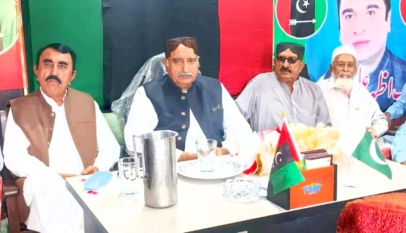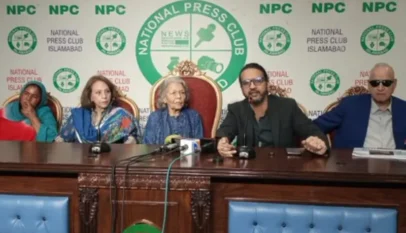

Addressing the seminar titled “No War Between Pakistan and India, Only Peace,” the speakers emphasized that wars primarily benefit the powerful elite, while innocent civilians bear the devastating consequences. They stated that no war ever has a true winner, and the solution to the Jammu and Kashmir dispute can only be achieved through dialogue and mutual trust between the two nations. For lasting peace in the region, it is essential to include the voices of the Kashmiri people in any level of negotiation.
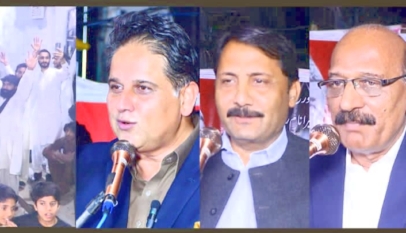
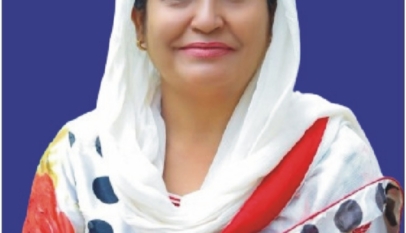
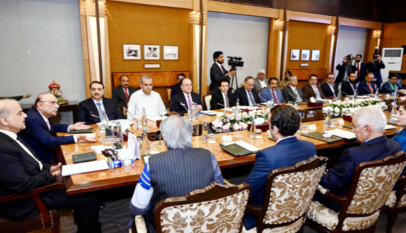
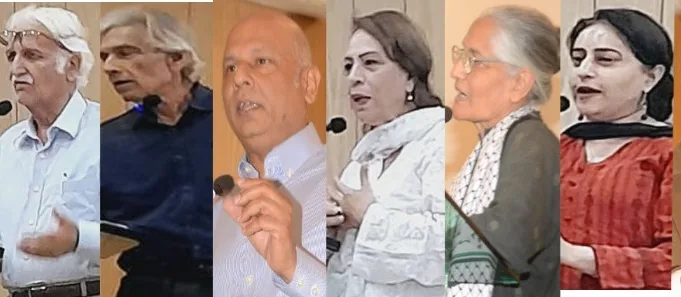
The seminar, held at the auditorium of the Zulfiqar Ali Bhutto Institute of Science and Technology (SZABIST), was attended by prominent figures, including Farhatullah Babar, President of the Pakistan People’s Party (PPP) Human Rights Cell; Asif Khan, CEO of the Shaheed Bhutto Foundation; Haris Khaliq, General Secretary of the Human Rights Commission of Pakistan (HRCP); human rights activist Tahira Abdullah; feminist and human rights advocate Farzana Bari; anchorperson Muneeza Jahangir; senior journalist Aizaz Syed; journalist Aamir, and others. The event also attracted participants from various sectors, including representatives from human rights organizations and journalists.
Speaking at the seminar, Farhatullah Babar highlighted that despite the ceasefire, a war of words continues between the two countries, but hope for peace remains. He praised the Shaheed Bhutto Foundation’s initiative for promoting dialogue, calling the ceasefire a victory for the idea that war is detrimental to humanity. He strongly condemned all forms of war, emphasizing that it only brings destruction and devastation. Citing the renowned poet Iftikhar Arif, he said, “Whether on the banks of the Euphrates or elsewhere, all armies are alike, all daggers are the same.” Babar also referenced a Chinese philosopher, noting, “If you know yourself and your enemy, you can win every battle. But if you don’t understand your enemy, defeat is certain.” He stressed that the real enemy is religious extremism, which remains a significant barrier to peace and progress in society.
Asif Khan, CEO of the Shaheed Bhutto Foundation, pointed out that while Europe has resolved most of its historical conflicts, the South Asian region still struggles with unresolved issues. He remarked that despite temporary ceasefires brokered by figures like former US President Donald Trump, the underlying tensions persist. He cited the ongoing Russia-Ukraine conflict as an example, noting that no true victors emerge from war. He further praised the Pakistan Army for maintaining its professionalism amidst such crises, moving away from the past accusations of political interference.
Haris Khaliq, General Secretary of the HRCP, spoke at length about the impact of colonialism and the nature of modern wars. He noted that “wars are often the result of colonial frustrations and communal divisions, which continue to impact societies globally.” He highlighted that before 1860, there were no major sectarian divisions like Barelvi and Deobandi in the Indian subcontinent, and that colonial powers deliberately fostered these divides to further their own interests. Khaliq also addressed the advanced nature of modern warfare, including drones and high-tech weaponry, which have made conflicts even more destructive. He cited the example of France’s former colonies, which, despite gaining political independence, remain economically dependent, with 85% of their economy still under French control.
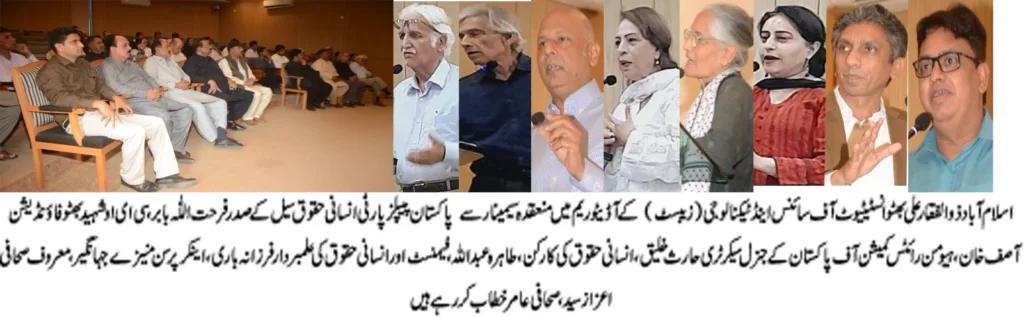
Tahira Abdullah, a prominent human rights activist, emphasized that peace is not merely the absence of war, but a broader, more inclusive concept. She stressed that true peace requires the active participation of all stakeholders, particularly women, who form half of the world’s population. She referenced the ongoing tensions since October 23, praising the recent exchange of prisoners between India and Pakistan as a positive step. Abdullah called for an end to excuses for conflict and urged for a significant reduction in military spending globally.
Farzana Bari, a feminist and human rights advocate, noted that wars are often the continuation of decades-long policies, with powerful narratives shaping public opinion. She criticized the capitalist system for exploiting the masses, highlighting that wars often benefit the powerful while leaving ordinary people to suffer the consequences.
Anchorperson Muneeza Jahangir, daughter of the late human rights icon Asma Jahangir, stressed that while active combat may have ended, a war of narratives continues. She criticized both India and Pakistan for disregarding the will of the Kashmiri people, whose rights have been compromised in the process. She also highlighted the role of international powers, including the United States, in escalating regional tensions.
Senior journalist Aizaz Syed addressed the impact of media on public perception during conflicts, emphasizing that media in both countries often serves as a tool for state propaganda, further widening the trust gap between the two nations.
The seminar concluded with a collective call for peace, dialogue, and the meaningful inclusion of Kashmiri voices in any future negotiations, recognizing that without this, true and lasting peace in the region remains a distant dream.