
The Federal Budget 2025-26 with a total outlay of 17573 billion rupees has been announced, encapsulating measures aimed at promoting inclusive and sustainable economic growth.
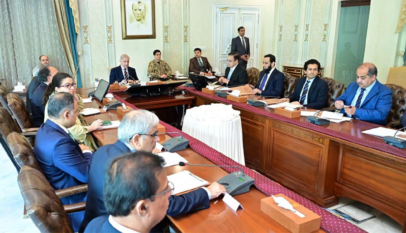
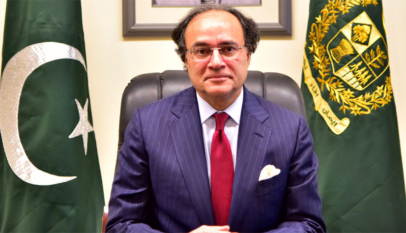
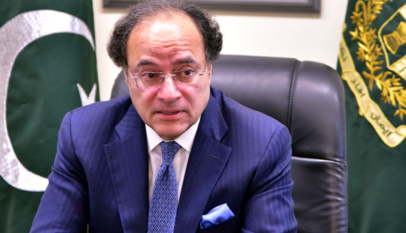
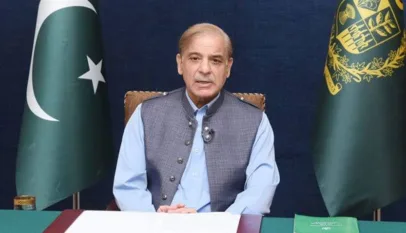
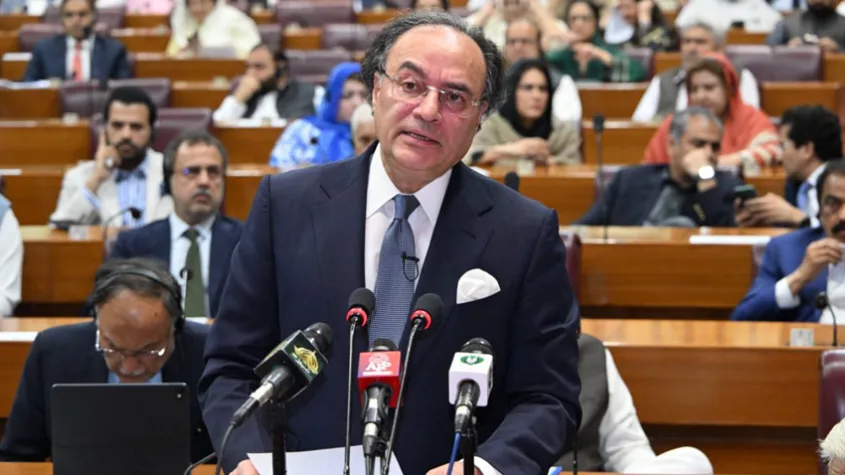
Presenting the budgetary proposals for the next fiscal year in the National Assembly on Tuesday evening, Minister for Finance and Revenue Muhammad Aurangzeb said this budget is a beginning of a strategy, crafted to promote competitive economy. This, he said, will bolster exports and foreign exchange reserves in order to avoid imbalances in payments and promote economic productivity. He said the budget strategy is aimed at bringing fundamental changes in the country’s economy.
The Finance Minister said the net revenue receipts have been estimated at 11072 billion rupees. The FBR collections are likely to be 14131 billion rupees, which is 18.7 percent higher than the current fiscal year and non-tax revenues will be 5147 billion rupees. He said the provincial share in the Federal receipts will be 8206 billion rupees.
Muhammad Aurangzeb said the economic growth rate is expected to be 4.2 percent and inflation 7.5 percent during the next financial year. The budget deficit will be 3.9 percent of GDP, while primary surplus will be 2.4 percent of GDP.
The Finance Minister said the country’s defence is the government’s most important priority. He said 2550 billion rupees are being provided for this national service. He said 971 billion rupees are being allocated for the civil administration expenditures, while 1055 billion rupees have been reserved for the pension expenditures. He said 1186 billion rupees are being earmarked for subsidy on electricity and other sectors.
Muhammad Aurangzeb said 1928 billion rupees are being allocated in the domain of grants, which is for Benazir Income Support Programme, Azad Jammu and Kashmir, Gilgit-Baltistan and newly merged districts of Khyber Pakhtunkhwa. He said the government intends to enhance the coverage of BISP. To achieve this, Kafalat Programme will be extended to 10 million families. Educational scholarship programme will be widened in order to benefit 12 million students. He said there is a proposal to earmark 716 billion rupees for BISP in the next financial year. He said it has been proposed to set aside 140 billion rupees for AJK, 80 billion rupees each for Gilgit-Baltistan and newly merged districts of Khyber Pakhtunkhwa and 18 billion rupees for Balochistan from the current expenditures.
It is pertinent to mention that an amount of four thousand two hundred twenty-four billion rupees has been earmarked for the National Development Plan in the budget for next fiscal year. This includes Federal PSDP of one thousand billion rupees, Provincial Annual Development Programs of 2,869 billion and State Owned Enterprises Development Outlay of three hundred fifty-five billion rupees.
The Annual Development Plan emphasizes public investment to drive private sector-led growth, tackle structural constraints, enhance climate resilience, and improve access to health and education.
The PSDP 2025-26 portfolio has been aligned with the objectives of URAAN Pakistan, while priority has been attached to high impact, near completion, foreign funded projects and new initiatives of national importance.
Key new initiatives and core projects under the current development agenda include major infrastructure projects such as the Widening and Improvement of N-5 (Phase-1), Mashkhel-Panjgoor Road and Eastbay Expressway Phase II in Gwadar.
Strategic advancements in Space Science are also prioritized through Pakistan Manned Space Mission and Pakistan Lunar Exploration rover.
Key urban and industrial projects include the development of Karachi Industrial Park and the Expansion of Safe City Islamabad.
In his speech in the Lower House, the Finance Minister announced that sixty percent of the total PSDP will be spent on basic infrastructure projects so that the entire country benefits from it.
He said the focus of provincial ADBs is social sector, for which sixty percent of allocations will be made. He said an effort has been made to align ongoing and new initiatives with Uraan Pakistan and National Economic Transformation Plan which is based on five Es.
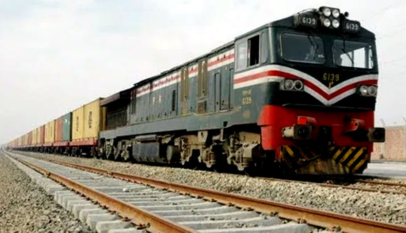
Giving a break up of PSDP 2025-26, Muhammad Aurangzeb said out of one thousand billion rupees, the biggest amount of 328 billion rupees has been earmarked for transport infrastructure projects. He said special emphasis has also been laid on road infrastructure projects. On the instructions of the Prime Minister, one hundred billion rupees have been allocated for the dualization of 813 kilometer long Karachi-Chaman highway. Fifteen billion rupees have been earmarked for Sukkur-Hyderabad motorway and seven billion rupees for Thar Coal rail connectivity project.
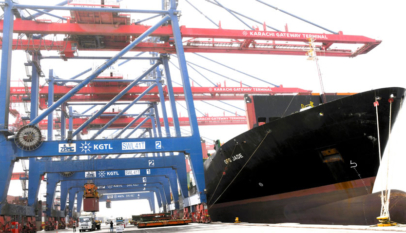
In the Maritime sector, the Finance Minister said that upgradation of facilities at Gadani Shipbreaking has been given a priority and an amount of 1.9 billion rupees set aside for this purpose. He said support to Gwadar Port infrastructure projects will continue from the PSDP. He said that support will also be provided for the provincial transport projects and for this purpose substantial funds will be allocated.
Alluding to the weaponization of water by India in recent days, the Finance Minister made it clear that no obstruction in the flow of water to Pakistan will be tolerated.
He said while Pakistan will respond to the Indian nefarious designs, it is also important to enhance our water reservoirs on war footing.
He said despite limited resources, the government will ensure implementation of water reservoir projects. A strategy in this regard will soon be announced.
The Finance Minister mentioned that thirty four out of fifty nine water projects were completed last year at a cost of 295 billion rupees.
He said 133 billion rupees have been set aside for Water Resources Division. He said 32.7 billion rupees have been earmarked for Diamer Basha, 35.7 for Mohmand Dam, 3.2 billion rupees for K-IV, ten billion rupees for lining of Kalri Baghar Feeder and 4.4 billion rupees for installation of telemetry system on Indus Basin System. 1.8 billion rupees have been set aside for Pat Feeder Canal, 690 million rupees for Kachhi Canal flood damages project and five billion rupees for Awaraan, Panjgoor, Garuk and Gash Koor dams.
The Finance Minister said 14.3 billion rupees have been set aside for twenty-one key projects under PSDP 2025-26 in the health sector. He said four billion rupees have been earmarked for the establishment of Jinnah Medical Complex and Research Centre Islamabad and one point seven billion rupees for the Cancer Hospital in Islamabad. One billion rupees have been reserved for the elimination of Hepatitis C and eight hundred million rupees for the prevention and control of diabetics. A state of the art stroke intervention centre and extension of critical are and cardiac facilities will be established at PIMS at a cost of 900 million rupees.
These projects will help overcome diseases, modernize healthcare infrastructure and ensure preventative care and quality health services to all the citizens.
Muhammad Aurangzeb said a total of 164 billion rupees have been earmarked in the PSDP 2025-26 for the Azad Jammu and Kashmir, Gilgit Baltistan and merged districts of Khyber Pakhtunkhwa. Forty-eight billion rupees each have been allocated for Azad Kashmir and Gilgit Baltistan and sixty-eight billion rupees for merged districts of Khyber Pakhtunkhwa. He further said the federal government has made block allocations of 32 billion rupees for Azad Jammu and Kashmir, 22 billion rupees for Gilgit Baltistan and 65 billion rupees for merged districts of Khyber. Besides, the Federal Government has allocated five billion rupees for Azad Jammu and Kashmir and four billion rupees for Gilgit Baltistan as Prime Minister’s Special Package.
Reaffirming the government’s commitment to provide cheap and sustainable energy to the consumers, the Finance Minister said 90.2 billion rupees have been proposed to be allocated for forty seven development schemes of energy sector. A major portion of this allocation will go to the electricity transmission from hydropower projects. He said one billion rupees will be given for the laying of five hundred KV Matiari- Moro- Rahim Yar Khan Transmission. 4.4 billion rupees will be set aside for Allama Iqbal Industrial City Grid Station and 1.1 billion rupees for Quaid-e-Azam Business Park’s 220 KV Grid Station. 1.6 billion rupees will be doled out for the installation of Asset Performance Management System on 100 and 200 KV transformers while 2.9 billion rupees will be given for Advance Metering Infrastructure project in IESCO. In addition, Multan Electric Power Company will be given 1.8 billion rupees, Hyderabad Electric Power Company 1.9 billion rupees and 2.4 billion rupees to Peshawar Electric Power Company to further enhance their performance.
The Finance Minister said 67.2 billion rupees have been proposed to be given for clean, renewable and hydropower projects initiated by WAPDA. This includes 2160 megawatts Dasu Hydropower project Phase-1, for which twenty billion rupees have been allocated. For Mohmand Hydropower Power Project, 35.7 billion rupees have been earmarked. He said three billion rupees will be given for five hydropower schemes in Azad Jammu and Kashmir and Gilgit Baltistan.
The Finance Minister announced allocation of four billion rupees for ten ongoing and five new schemes in the agriculture sector. He said special emphasis will be given for the revival of cotton and livestock sectors.
Regarding the education sector, he said the Higher Education Commission will be given 39.5 billion rupees for one hundred and seventy projects. He said this amount will help complete the ongoing projects. An allocation of 4.8 billion rupees has been made for thirty one ongoing schemes in the domain of Science and Technology.
The Finance Minister said on the instructions of Prime Minister, special emphasis is being given to the establishment of Daanish Schools in less developed areas. He said eleven new Daanish schools will be established including three each in Azad Jammu and Kashmir and Gilgit Baltistan, four Balochistan and one in Islamabad. He said 9.8 billion rupees will be provided from the PSDP for the establishment of these schools.
He said other projects in the education sector include establishment of Early Childhood Education centers, computer labs and National Institute of Excellence. He said these are aimed at ensuring access to education, reduce the dropout rate and improve the standard of education. For these efforts, 18.5 billion rupees have been set aside in the PSDP.
Talking about relief measures, the Finance Minister said the government, despite financial constraints, has decided to give 10 percent increase in salaries to government employees from Grade-1 to Grade-22. Thirty percent Disparity Reduction Allowance for deserving government employees has been proposed in the budget.
Besides, seven percent increase has been proposed in the pension of the retired government employees.
The Special Conveyance Allowance of four thousand rupees monthly for special persons will be increased to six thousand rupees.
He said the Armed Forces of Pakistan have rendered exemplary services for defence of the motherland. In recognition of their services, it has been proposed to give a Special Relief Allowance to the Officers, JCOs and Soldiers of the Armed Forces of Pakistan. These expenditures will be met from the allocated Defence Budget of 2025-26.
He said the government has proposed a number of changes in all tax slabs on the annual income of the salaried class.
He said ratio of tax from the employees getting six to twelve lac rupees salary has been reduced to 2.5 percent from the existing five percent. Tax has been reduced to 6000 rupees from existing 30,000 rupees on the employees getting twelve lac rupees.
Similarly, it has been proposed to reduce tax from 15 to 11 percent on the employees receiving salary upto twenty two lac rupees.
Moreover, it has been proposed to reduce tax from 25 percent to 23 percent from the employees getting salary from 22 lacs to 32 lac rupees.
The government has also proposed to reduce one percent surcharge on the people getting more than ten million rupees salary to prevent brain drain of highly professional and skilled people abroad.
As regards easing taxes on the corporate sector, Muhammad Aurangzeb said a reduction of 0.5 percent in the super tax has been proposed for the corporations generating 200 million to 500 million rupees annual income. He said this concession indicates government’s resolve to rationalize the ratio of the corporate tax.
The Minister said withholding tax on purchase of property is being reduced from four percent to 2.5 percent and three point five percent to 2.5 percent as well as three percent to 1.5 percent. He said there is a proposal to abolish the Federal Excise Duty up to seven percent on the transfer of commercial properties, plots and houses to lessen burden on the construction sector. To encourage mortgage for the provision of loan on low cost housing, tax credit is being introduced on Houses upto ten Marla and flats of 2000 square feet. He said the government will promote mortgage financing and comprehensive mechanism will be introduced in this regard.
Muhammad Aurangzeb said stamp paper duty on purchase of property in Islamabad Capital Territory will be reduced from four percent to one percent so that shortage of houses can be addressed. He expressed the confidences that these measures will accelerate the housing sector enabling it to play its due role in the economic development of the country.
The Minister said the government is introducing various measures to improve equality in the tax system. He said it has been observed that salaried and business class pay heavy taxes while people earning from non-traditional means relatively pay less taxes. To ensure equality tax ratio on interest income is being enhanced from 15 to 20 percent. However, this ratio will not be applicable to national saving schemes.
The Minister said online marketplaces and couriers services will be bound to submit their transactions data and other tax related report on monthly basis.
Muhammad Aurangzeb said five percent tax will be imposed on pensioners, below seventy years, receiving more than ten million rupees to broaden the tax base. He said the government has no intension to impose any tax on low pension.
The Minister said the government is proposing various measures to promote cashless economy under which tax ratio of 0.6 percent is being increased to one percent on withdrawal of cash amount by non-filers. He said rented income from commercial properties will be treated on fare market value with the standard ratio of four percent. This will reduce discretionary powers of the tax officials.
Muhammad Aurangzeb said a new classification system regarding the income tax is being introduced to end difference between filers and non-filers. He said only individuals who will submit their income returns and wealth statement will be entitled to undertake big business dealings, which include procurement of vehicles, immovable property, investment in securities and mutual funds and opening particular bank accounts. These people are required to show their financial position, income, gifts, loans, inheritance and other financial resources through the FBR portal.
Regarding sale tax, the Minister said there is a proposal to impose 18 percent tax on E-commerce platforms and on the import of solar panels. He further said a gradual sales tax will be imposed on merged districts of Khyber Pakhtunkhwa and Balochistan which were exempted in last seven years. He said this will be started from the next fiscal year with the ratio of ten percent.
The Finance Minister announced that as per directive of the Prime Minister, no new tax is being imposed on fertilizers, and pesticides to provide relief to farmers. He paid gratitude to International Monetary Fund for cooperation in this regard.
The Finance Minister highlighted stringent measures being introduced to curb sales tax evasion including freezing of accounts of unregistered businesses, ban on their transfer of property and sealing their business place in case of serious crime. He, however, said that legal requirements will be fulfilled before taking these measures.
The Finance Minister underscored the need for an international agreement on tax regulations between the countries as many foreign businesses these days are selling their services and goods in other countries on the basis of their digital presence, and not any permanent establishment.
He mentioned that many countries have already introduced Digital Services Tax to impose tax on such foreign businesses.
The Finance Minister said a new law is being introduced till reaching an international agreement, to resolve the issue of non-payment of taxes by foreign businessmen on the services and goods they sell in Pakistan. He said under the law, a five percent tax will be imposed on proceeds of these foreign businesses in Pakistan.
About the textile sector, he said during the year 2024-25, under the Export Facilitation Scheme, sales tax was imposed on local purchase of raw material, which had affected the local cotton growers and textile mills because the imported yarn remained exempted from sales tax. He said sales tax has been imposed on imported yarn this year to remove this disparity.
The Finance Minister said it has been proposed to impose Carbon Levy at the rate of 2.5 rupees per liter on furnace oil, high speed diesel and petrol with the aim to discourage the use of fossil fuel and ensure availability of financial resources for climate change and Green Energy programs. He said this levy will be enhanced to five rupees per liter in the fiscal year 2026-27.
The Finance Minister said the government has framed a new energy vehicle policy which is aimed at encouraging the use of electric vehicles instead of petrol and diesel powered vehicles.
The Budget also envisages enforcement measures under Federal Excise Duty. The Finance Minister said it has been proposed to seize those items having no barcodes or original tax stamps under Track and Trace System.
He said enforcement powers are also being delegated under Federal Excise Duty to the particular provincial officers in small cities and rural areas in view of limited presence of FBR. He said this step is especially aimed at effectively curbing the smuggling of non-duty paid cigarettes.