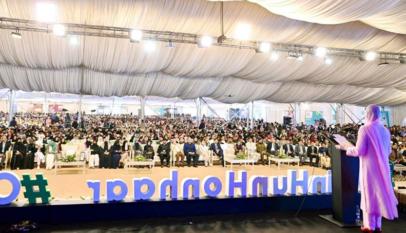

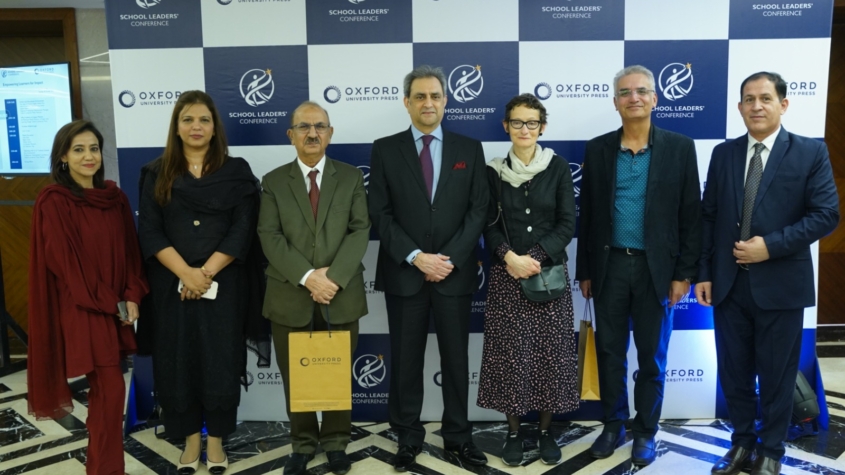
Oxford University Press Pakistan (OUPP) hosted the School Leaders’ Conference in Islamabad, bringing together educators, policymakers, and academic experts from across the region. As the capital and a center of governance, diplomacy, and policymaking, Islamabad offered an ideal setting for impactful discussions on advancing teaching, learning, and assessment, developing collaboration among key stakeholders from across the country.
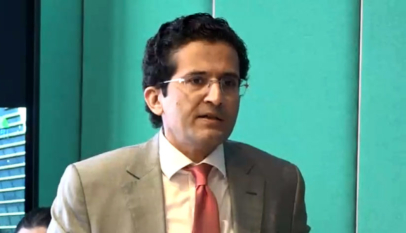
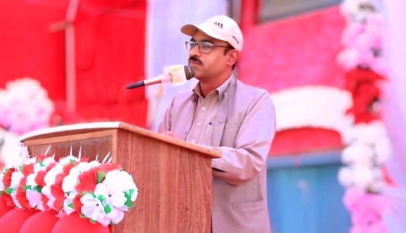
In his welcome address, Arshad Saeed Husain, Managing Director, OUP Pakistan, speaking about the challenges facing education in Pakistan, said that “schools must prioritize skills-based curricula, robust teacher development, contemporary pedagogy, holistic learning, and digital competence, only then can we equip students to thrive in a rapidly evolving global landscape.”
He concluded by saying, “Oxford University Press will continue to be on this journey with you. We bring our heritage of excellence, our commitment to teacher development, and our belief that every child in Pakistan deserves learning that is engaging, rigorous, and humane.”
The conference, themed “Empowering Learners for Impact,” featured a strong lineup of education leaders and panellists, including Dr Shahid Siddiqui, Dr Shoaiba Mansoor, Dr Tabassum Naz, Aien Shah, Bugra Ozler, Hassan Sattar, and Raheel Sajjad. They shared their perspectives on how innovation and collaboration can drive meaningful change in schools.
Dr. Penelope Woolf, Director of Impact & Learning Design, OUP said, “At Oxford University Press, we are committed to developing educational solutions that deliver real impact in the most effective way possible. By combining the best in research-informed learning design and pedagogy with our extensive educational experience and expertise globally, we develop products and services that will support teachers, advance knowledge and learning, and deliver the best educational outcomes for all.”
Dr. Shahid Siddiqui, Dean, Faculty of Social Sciences, Media Studies, Art and Design, Lahore School of Economics, shared his perspective on educational leadership. He said, “Schools must become enabling spaces where curiosity, creativity, and critical thinking are encouraged, and every student’s potential is recognized and celebrated. Such spaces can only be created by reflective teachers who act as the real change-makers, and we must invest in their professional growth to create a sustainable impact.”
He emphasized the transformative power of education, stating, “True educational leadership goes beyond administration; it is about inspiring a culture of inquiry, change, and personal and organizational development, and empowering teachers to shape future generations with vision and empathy.”
Dr. Shoaiba Mansoor, Deputy Education Advisor, Ministry of Federal Education and Professional Training Pakistan, said, “Education is the most powerful tool for shaping a better future, and school leaders are the torchbearers of this change. By empowering learners, we are not just preparing students for exams, we are preparing them to lead, innovate, and create impact. I appreciate Oxford University Press Pakistan for creating a platform that strengthens leadership in education.”
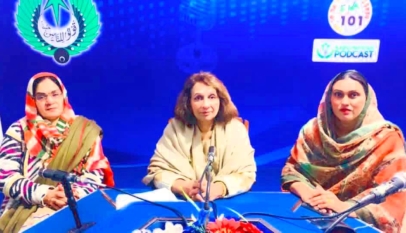
Throughout the day, presentations and panel discussion focused on key issues such as preparing students for a rapidly evolving world, leading change through innovative teaching, developing collaborative leadership in education, and embracing a digital future with OUPP’s blended learning resources.
The event ended with an interactive Q&A session, giving educators a chance to engage directly with the OUP leadership and assessment experts.