
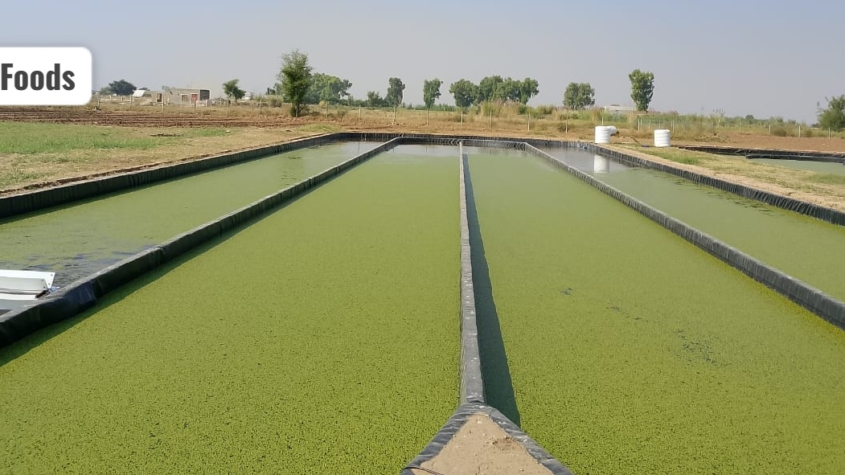
In response to Pakistan’s growing agricultural trade deficit, Islamabad-based agri-tech company Ful Foods is developing a novel approach to reduce the country’s dependence on imported feed proteins by cultivating duckweed as a sustainable alternative for livestock feed.
Pakistan’s livestock sector, which includes an estimated 30 million cows, 40 million buffaloes and nearly 1.5 billion poultry birds, relies heavily on imported feed ingredients, particularly protein sources. These imports cost the national economy about $2 billion annually, with expenses increasing by 37 percent over the past year due to global supply chain disruptions and currency depreciation.
Duckweed (Lemna minor), a small floating aquatic plant, is gaining global recognition as a viable protein source. Scientific studies indicate that duckweed contains between 20 and 40 percent protein by dry weight, comparable to soybean meal. Its ability to double its biomass within 96 hours makes it an efficient and rapidly renewable feedstock.
Ful Foods has conducted controlled feeding trials in collaboration with local farms in the Talagang–Chakwal region to assess duckweed’s performance in poultry diets. Over a 90-day period involving 1,000 layer chickens divided into control and test groups, birds fed a duckweed-supplemented diet showed a 42.8 percent increase in egg production compared to those receiving standard commercial feed. The trials also recorded a 22 percent reduction in feed costs for the duckweed group, while egg quality remained within industry standards.
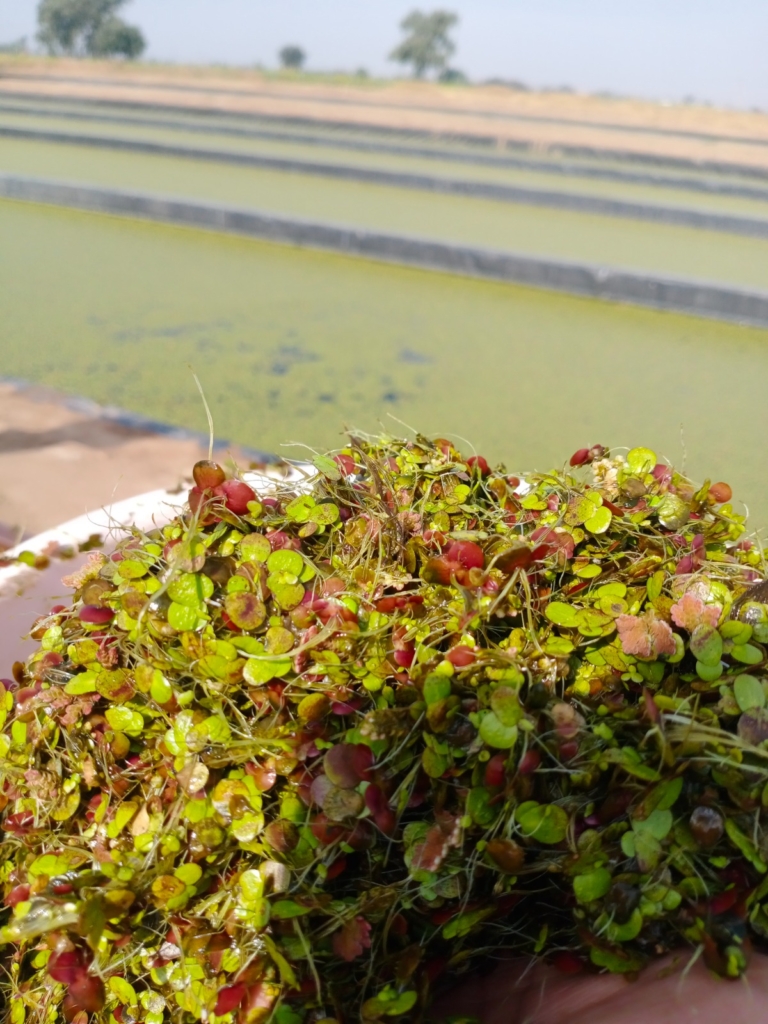
The company estimates that large-scale adoption of duckweed cultivation could substitute up to $78 million worth of imported feed protein annually by 2026, equivalent to about four percent of Pakistan’s current feed protein imports. Duckweed also offers environmental advantages, particularly in a water-stressed country like Pakistan. It requires significantly less water than conventional crops, with estimates showing nearly 17 times lower water usage per ton of protein produced. Additionally, duckweed cultivation systems have the potential to sequester notable amounts of carbon dioxide depending on management practices.
From a cost perspective, soybean meal currently sells at approximately Rs. 8,500 per 40 kilograms, while duckweed-based protein supplements are priced at around Rs. 7,200 per 40 kilograms, offering farmers an estimated 15 percent reduction in feed costs.
Despite its potential, challenges remain in scaling production, maintaining consistent protein content and educating farmers on incorporating new feed ingredients. Ful Foods says it is addressing these issues through modular pond systems and the development of standardization protocols. Each pond can produce between 250 and 300 kilograms of feed ingredient per week. The company currently operates 12 ponds and plans to expand to 50 by the end of the year.
Internationally, Pakistan’s efforts align with similar initiatives underway in countries such as Thailand, the Netherlands and the United States. In Thailand, ABC Proteins reportedly produces about 5,000 tons of duckweed protein annually, primarily for aquaculture. The global alternative protein market for animal feed is projected to reach $4.6 billion by 2026, with plant-based proteins accounting for roughly 60 percent of the market.