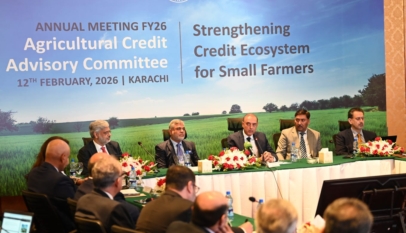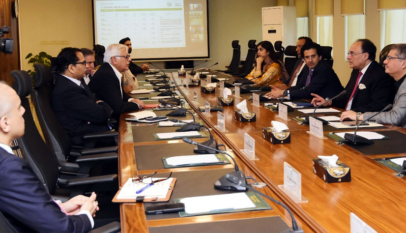

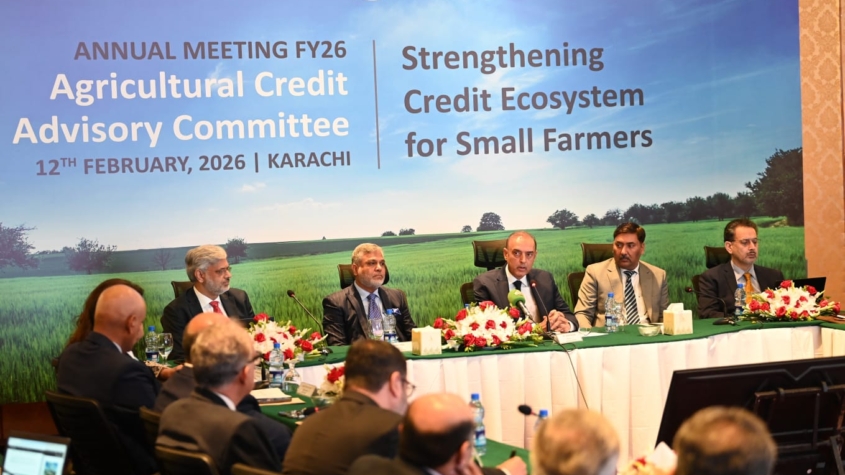
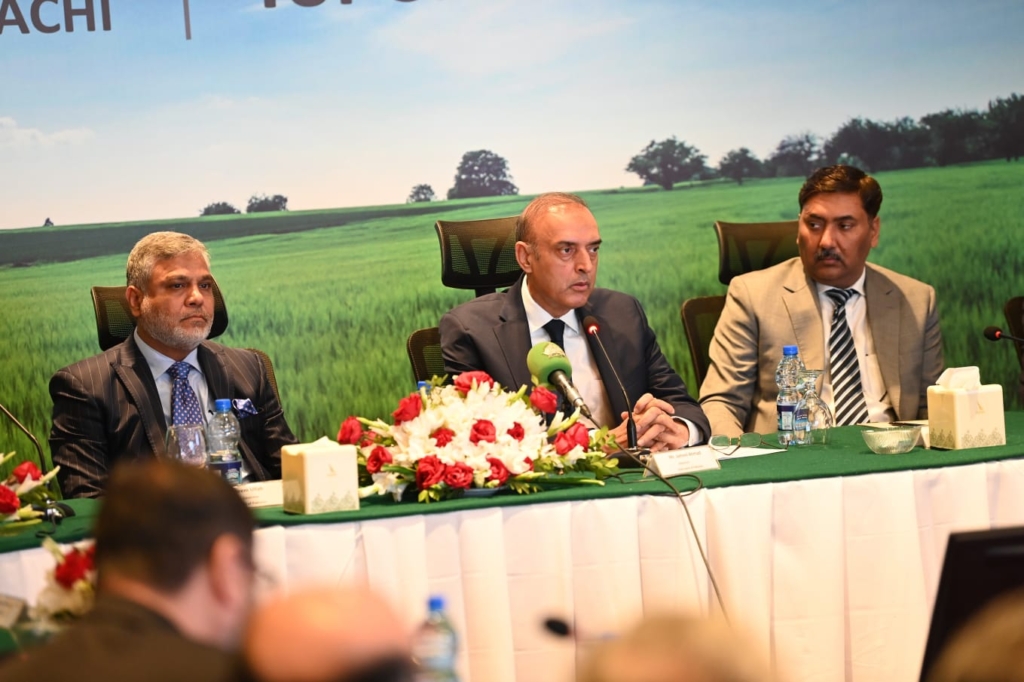
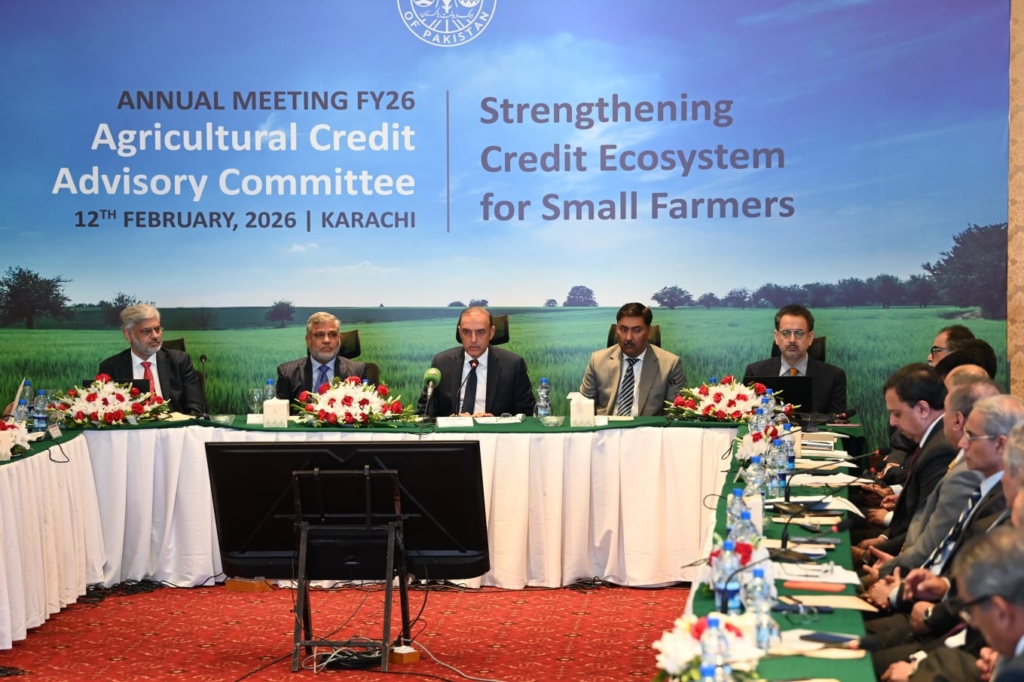
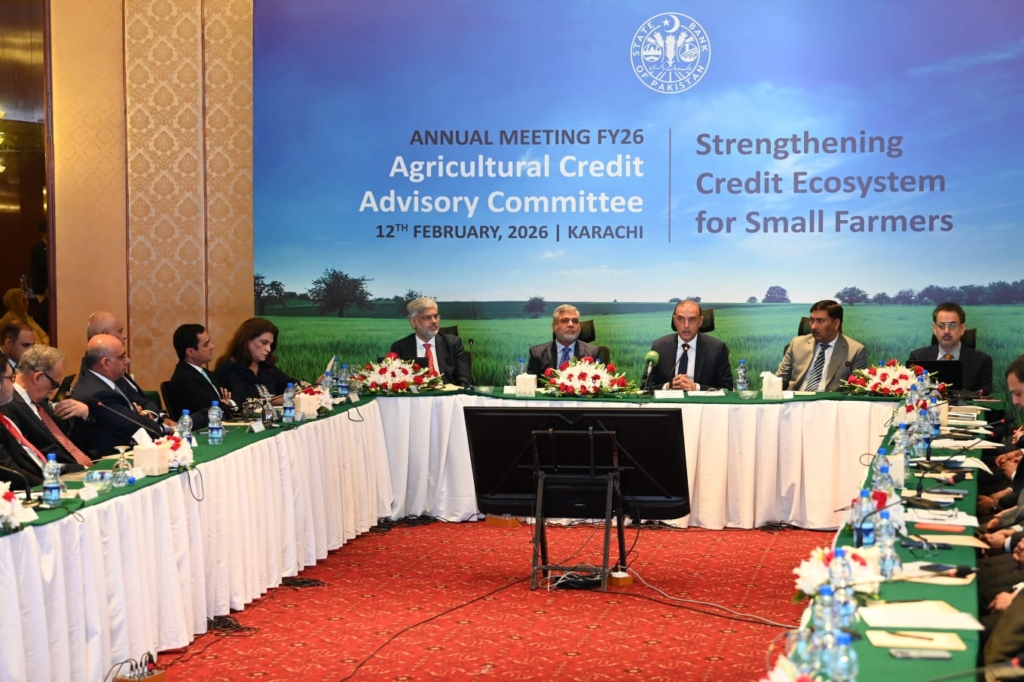
The State Bank of Pakistan (SBP) held the meeting of the Agricultural Credit Advisory Committee (ACAC) today in Karachi to review agricultural credit performance and discuss measures for strengthening inclusive and resilient agricultural finance.
In his address, Governor SBP, Mr. Jameel Ahmad noted that Pakistan’s economy has regained macroeconomic stability and is moving towards a more durable growth path. He shared that real GDP growth reached 3.7 percent in Q1-FY26, while full-year growth is projected in the range of 3.75 to 4.75 percent. He further noted that headline inflation has moderated to 5.8 percent by January 2026, enabling monetary policy to support growth while remaining anchored in price stability. The external account remains broadly contained due to prudent policies, resilient remittances and stable commodity prices.
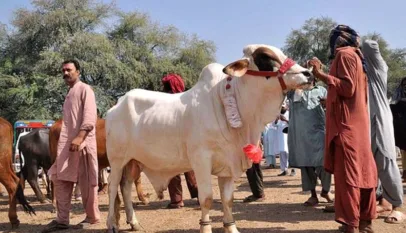
The Governor underscored that agriculture remains critical for improving farm productivity, supporting rural livelihoods, and ensuring food security. He emphasized the need to strengthen agricultural financial intermediation to support value addition, market linkages, and sustainable growth in the sector. During FY25, due to collaborative efforts by SBP and the banking sector, a record agricultural credit disbursement of Rs. 2,577 billion was achieved, marking a 16 percent annual increase. Building on this momentum, agricultural credit disbursements during the first half of FY26 reached Rs. 1,412 billion, while the number of borrowers rose modestly to 2.97 million.
To accelerate borrower expansion particularly among small farmers in the underserved and unserved areas the Governor urged banks to fully leverage SBP’s initiatives, including the Risk Coverage Scheme for Small Farmers and Underserved Areas and Zarkheze, SBP’s flagship digital platform for agricultural lending. The Committee reviewed progress under Zarkheze, which represents a major step towards the digital transformation of agricultural credit delivery in Pakistan. The platform enables digital onboarding of farmers, standardized credit assessment, integration with land and crop information, and end-to-end traceability of loans, while ensuring financing is utilized for quality agricultural inputs through an integrated vendor network.
The Governor emphasized that Zarkheze must be scaled up as a core delivery channel for agricultural finance, particularly to make small-ticket lending commercially viable and to expand outreach beyond traditional high-volume regions. He urged banks to ensure timely processing of applications, strengthen internal ownership of the scheme, and further develop the vendor ecosystem to improve farmers’ access to certified inputs and embedded advisory services.
Going forward, the Governor also called on banks to ensure full implementation of their Agricultural Credit Expansion Plans for FY26, and emphasized the importance of coordination with provincial governments for digitization of land records and partnerships with fintechs, agri-tech firms, and microfinance institutions to enhance outreach.
The meeting also discussed the development of an upgraded crop loan insurance framework, CLIS+, being formulated under the ADB-funded Pakistan Insurance Transformation Program (PITP) to strengthen the agriculture sector’s resilience against calamities. The proposed scheme aims to expand crop coverage, establish an insurance consortium for improved risk sharing and farmer payouts, and introduce technology-based calamity assessment along with enhanced protection through loss-of-income support. Going forward, ADB’s Solidarity Fund will also support extending coverage to non-borrowing farmers and the development of a National Insurance Policy for Agriculture.
In addition, the ACAC deliberated on scaling up Electronic Warehouse Receipt Financing (EWRF) to improve post-harvest liquidity, reduce distress sales, and strengthen agricultural market linkages. The Committee noted the need to expand accredited warehousing infrastructure and enhance bank participation in EWR-based financing.
The Governor outlined three priorities for the banking sector, highlighting that Zarkheze provides the infrastructure to achieve them:
- Delivery: Expand borrower outreach, especially through microfinance banks and small-ticket products.
- Inclusion with depth: Strengthen financing for subsistence and small farmers through productivity-enhancing credit.
- Geographical diversification: Extend agricultural finance to underserved areas.
Concluding the meeting, the Governor urged banks to focus on expanding the agricultural borrower base, strengthening inclusion of small farmers, and scaling up digital delivery channels such as Zarkheze to support sustainable agricultural growth.
The ACAC meeting continues to serve as a strategic platform under SBP’s leadership, bringing together financial institutions and key stakeholders to advance agricultural finance as a driver of inclusion, productivity, and long-term economic resilience.