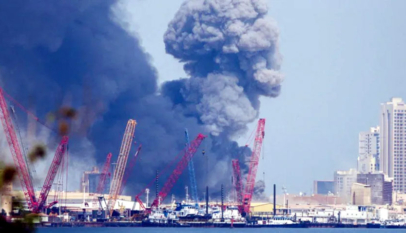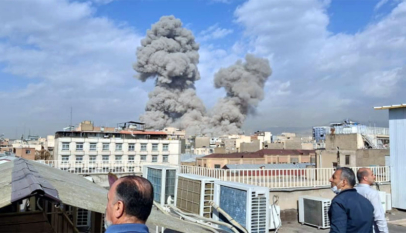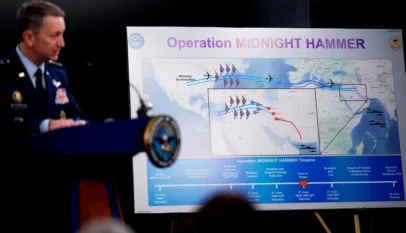

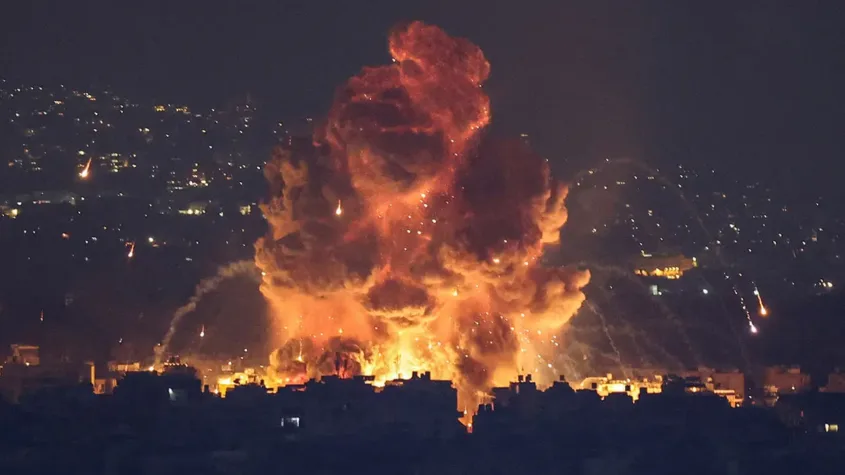
In the early hours of June 10, 2025, at approximately 2:37 AM local time, Israel launched a bold and coordinated military strike against key Iranian targets. This marked one of the most expansive and overt Israeli air operations in recent history, conducted deep within Iranian territory. The strikes focused on strategic military and nuclear sites in Tehran, Natanz, Isfahan, and Tabriz, employing a combination of stealth fighter jets and kamikaze drones in a precision-guided assault.
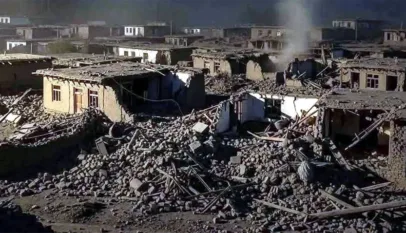
Witnesses in Tehran reported loud explosions and a temporary blackout in several northern districts. The main target in the capital was a defense ministry command node, where at least 19 Iranian military personnel, including four members of the Islamic Revolutionary Guard Corps (IRGC), were reportedly killed. In Natanz, which houses one of Iran’s key uranium enrichment facilities, satellite imagery revealed structural damage consistent with deep-penetration bombs, potentially compromising the underground centrifuge complex. Although Iranian officials claimed no nuclear material was affected, international analysts suggested significant disruption to enrichment operations.
Isfahan, home to both nuclear and air-defense assets, saw the destruction of radar installations and a drone manufacturing complex near a military airbase. Iranian sources confirmed 12 fatalities and the loss of multiple radar and drone systems. In Tabriz, an advanced signals intelligence relay station was disabled, reportedly knocking out large portions of eastern Iran’s radar coverage for several hours.
The Israeli Air Force deployed between six and eight F-35I “Adir” stealth fighter jets, equipped with precision-guided JDAM-ER bombs and small-diameter bombs. The mission was supported by mid-air refueling from KC-707 Re’em tankers, likely operating through neutral airspace over Jordan or Iraq. In addition to manned aircraft, Israel launched over 20 IAI Harop drones from undisclosed launch sites, believed to be either offshore platforms or northern Iraq. These loitering munitions, capable of real-time target acquisition, struck secondary command and logistics nodes with high accuracy.
There were also reports of Israeli electronic warfare being used to disable Iranian air defense systems during the attack window, with jamming activity estimated to have lasted between 30 and 45 minutes. Iran’s air defense systems, including S-300, Sayyad-3, and Mersad platforms, attempted to intercept incoming aircraft and drones. Iranian state media claimed a 60 percent interception rate, but post-strike analysis by independent defense observers suggests only about 15 to 20 percent of the Israeli munitions were intercepted.
The Iranian military has not responded directly so far, though the IRGC issued a statement emphasizing “strategic patience” while reserving the right to retaliate at a time and place of its choosing. Over the next 48 hours, there was a notable increase in Iranian drone surveillance activity over the Persian Gulf. No Israeli aircraft losses were confirmed, while Iran reportedly lost at least two aging Su-24 aircraft grounded during the strike.
In total, the strikes are believed to have caused at least 45 fatalities among Iranian military personnel and inflicted significant damage across six strategic installations. Civilian casualties were reportedly minimal, though some minor infrastructure damage was observed in urban zones near the strike sites. The precision and depth of the operation drew immediate international attention, raising tensions across the Gulf and beyond.
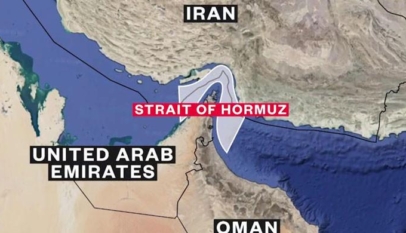
Analysts believe the strike was triggered by a combination of escalating concerns over Iran enriching uranium close to weapons-grade levels, IRGC naval provocations in the Strait of Hormuz, and intelligence linking Iran to recent attacks on Israeli shipping routes. The U.S. was not directly involved in the strike but elevated the readiness level of its forces in the region. American aircraft carriers were repositioned in the eastern Mediterranean, and CENTCOM confirmed ongoing coordination with regional allies.
Arab states, including Saudi Arabia and the UAE, maintained public silence. However, regional aviation trackers suggested Israeli aircraft may have transited through Jordanian airspace under silent cooperation. The Israeli government has not officially confirmed the attack, but top defense officials hinted at it during closed-door briefings with allied diplomats.
Military experts have interpreted the operation as a demonstration of Israel’s long-range strike capability, independent of U.S. logistical support, and a clear signal to Tehran that further nuclear escalation would carry grave consequences. For Israel, the strike reasserts a longstanding doctrine: any movement by Iran toward weaponization of its nuclear program will trigger a military response.
Dr. Amos Harel, a senior defense analyst, described the operation as “a geopolitical message carved in precision munitions.” Meanwhile, retired IRGC General Hassan Moqaddam called the strike “a wake-up call for the Islamic Republic to reassess its defensive posture and regional overreach.”
With the region now on edge, world powers are urging restraint while preparing for possible aftershocks. Iran has called for an emergency session of the UN Security Council, while Israeli embassies worldwide have been placed on heightened alert. The events of June 10 may prove to be a turning point in the long-simmering shadow war between the two adversaries, now brought into the light of open confrontation.