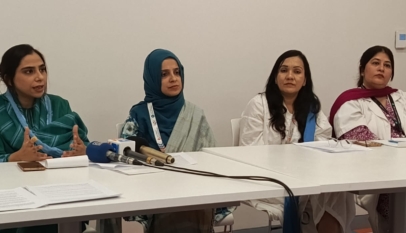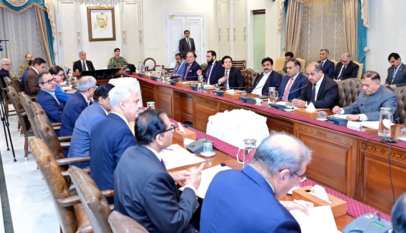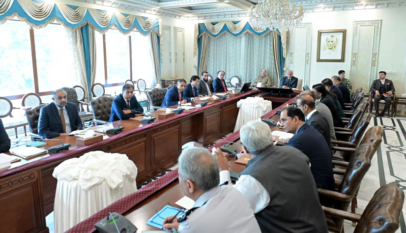

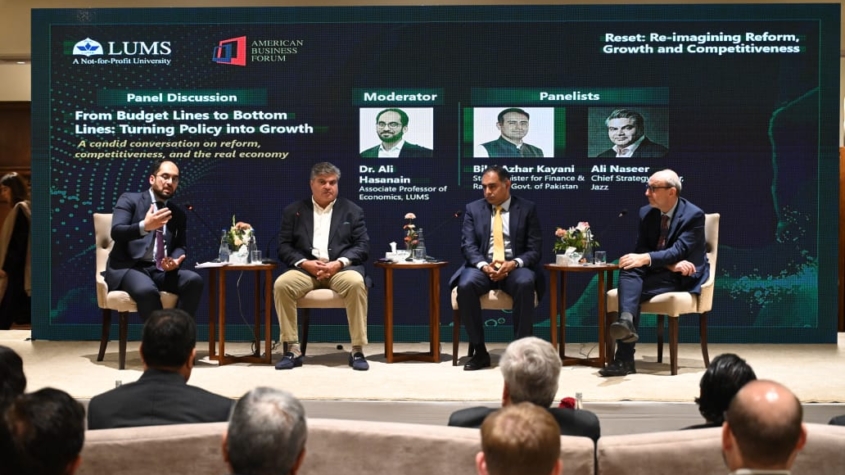
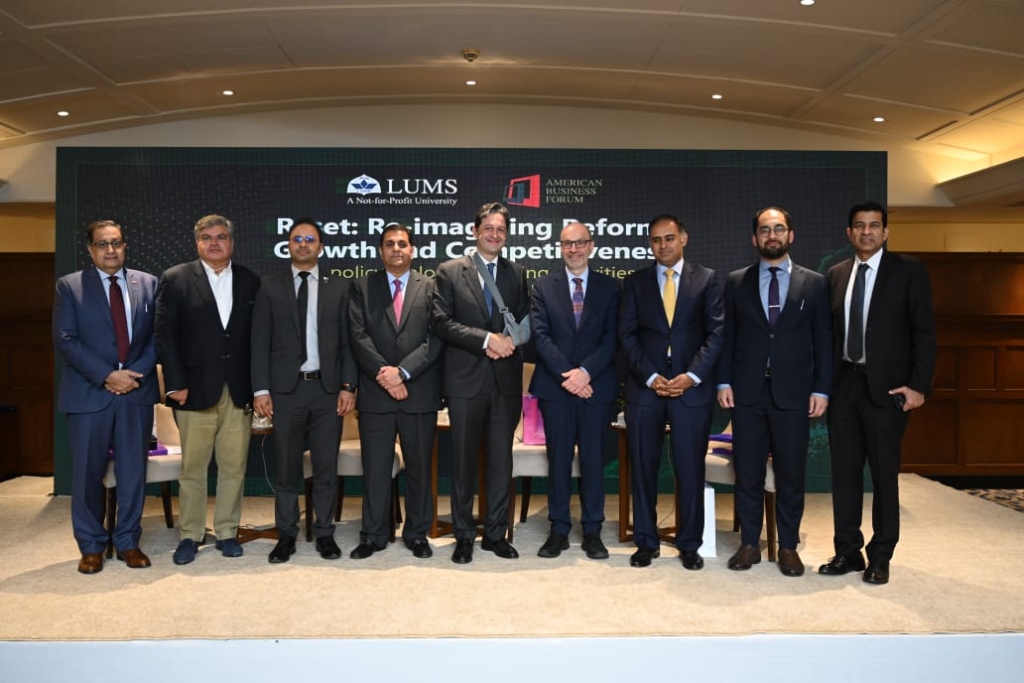
At a time when Pakistan stands at a critical economic crossroads, Lahore University of Management Sciences (LUMS) and the American Business Forum (ABF) jointly organised a high-level policy dialogue in Islamabad aimed at developing a robust and sustainable roadmap for Pakistan’s economic growth and stability.
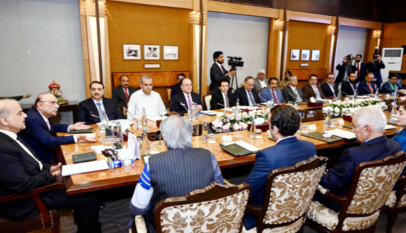
Titled “Reset: Re-imagining Reform, Growth and Competitiveness,” the session brought together senior policymakers, economists, business leaders, academics, and members of the diplomatic community to deliberate on structural reforms, export competitiveness, and long-term economic resilience.
Welcoming the participants, Usman Khalid Waheed, President of the American Business Forum and CEO of Ferozsons Laboratories, said Pakistan’s economic challenges are the result of decades of short-term thinking and rent-seeking behaviour across both the public and private sectors. He noted that successive budget cycles focus on incremental adjustments, while deep structural reforms continue to be delayed.
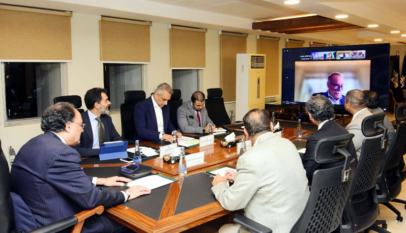
The keynote address was delivered by Stefan Dercon, Professor of Economic Policy at the University of Oxford and a globally recognised development economist. He emphasised that without fundamental structural reforms, Pakistan’s economy would struggle to achieve sustainable growth.
Professor Dercon stressed the urgent need for a credible and implementable five-year reform agenda, warning that economic stabilisation without reform remains fragile. Drawing comparisons with high-growth economies such as China, India, and Vietnam, he cautioned that once Pakistan’s growth exceeds four percent under its current economic structure, balance-of-payments pressures could once again push the country toward an IMF programme.
He pointed out that Pakistan’s exports remain stuck at around 10 percent of GDP and private investment continues to lag, limiting long-term productivity. He also criticised “sugar-rush” fiscal stimulus measures and across-the-board tax cuts, arguing that true reform requires reallocating capital toward competitive, export-oriented sectors rather than protected domestic markets. Professor Dercon further highlighted the importance of policy stability, elimination of unnecessary taxes, improvement in regulatory quality, and expansion of exports to ensure macroeconomic balance.
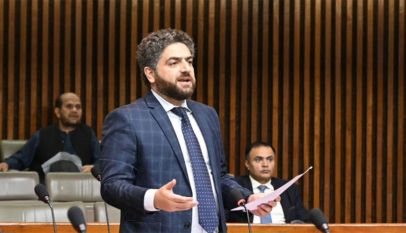
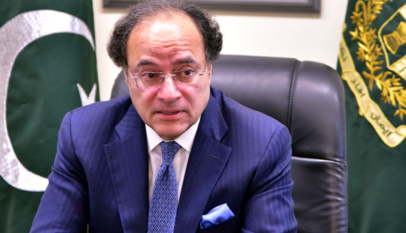
Speaking on the occasion, Bilal Azhar Kayani, Minister of State for Finance and Railways, said the government believes in dialogue-based policymaking to achieve economic stability. He shared that several corrective measures have already been undertaken, including tariff rationalisation under the National Tariff Policy to reduce distortions and promote export-led growth.
Referring to the government’s flagship Uraan Pakistan initiative, he said it provides a clear strategic direction for economic improvement, while acknowledging that further refinement is possible through measurable targets and disciplined implementation. He also stated that privatisation efforts are being accelerated and digitalisation is being promoted across sectors to improve efficiency and unlock private sector potential. Emphasising policy continuity, he admitted that frequent policy reversals in the past have undermined investor confidence.
Representing the business community, speakers underscored the need for regulatory consistency and predictable policy frameworks, noting that uncertainty has been more damaging to long-term investment than taxation or energy costs alone. Participants also discussed industrial policy, digital transformation, and the need to move away from excessive protectionism to better integrate Pakistan into global value chains.
LUMS faculty members, including Professor Ali Hasnain, along with Muhammad Ali Ibrahim, Director of Advancement Office at LUMS, reiterated the university’s commitment to evidence-based policymaking and national dialogue, stressing that academic research must meaningfully inform both government and enterprise decision-making.
The session concluded with a broad consensus that while recent macroeconomic stabilisation has provided temporary breathing space, Pakistan’s long-term prosperity depends on implementing politically difficult but essential structural reforms to sustainably raise productivity, exports, and competitiveness.