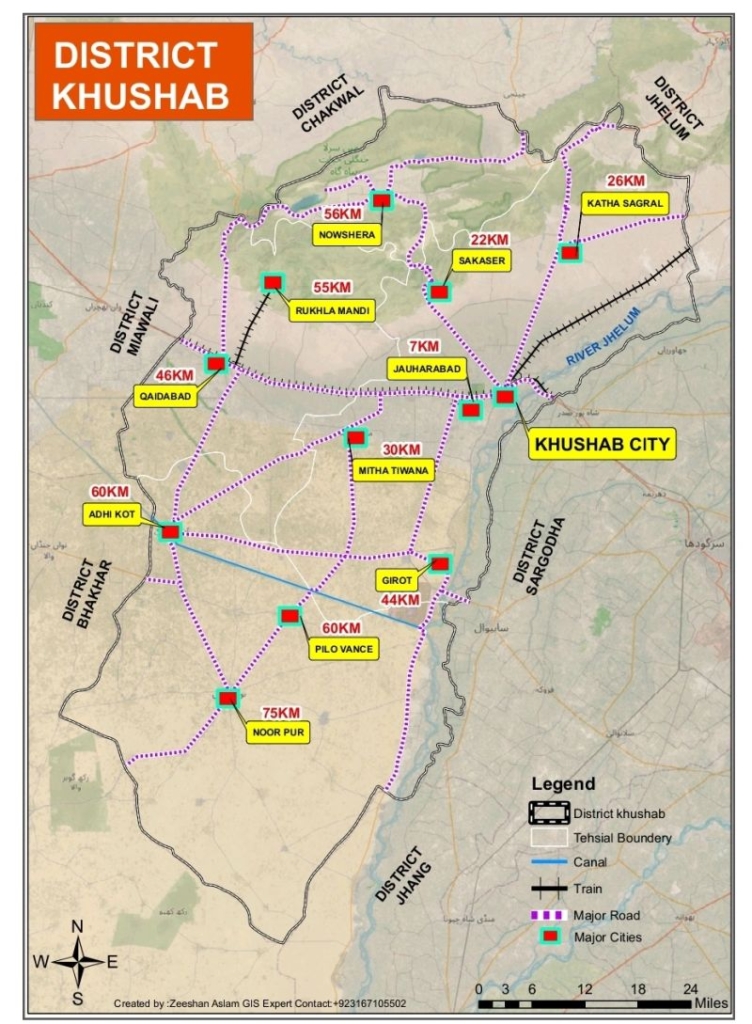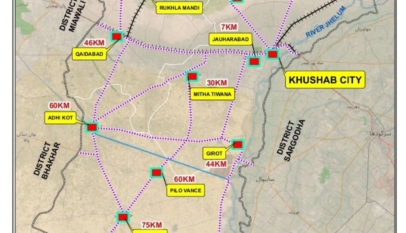

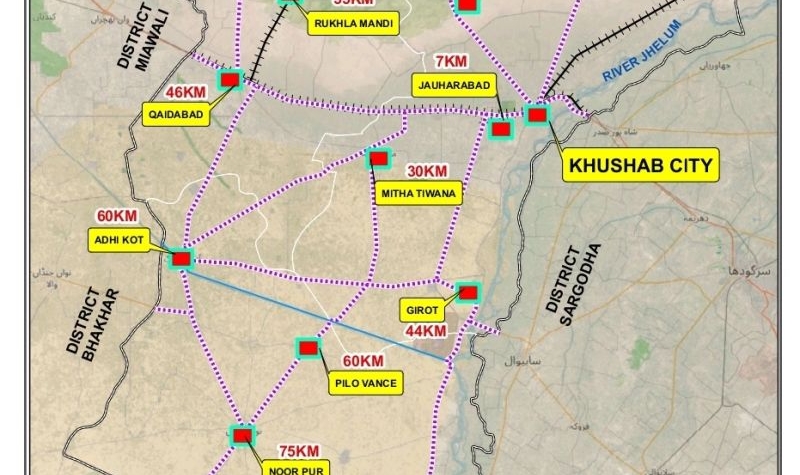
Located in the heart of Punjab, District Khushab holds a unique position due to its ancient civilization, historical heritage, and rich cultural traditions. This region is not only known for its natural beauty and fertile lands but also for a history that spans centuries. The four important tehsils of Khushab District—Khushab, Quaidabad, Noorpur Thal, and Nowshera—are significant not only administratively but also historically, culturally, and socially. The land of these areas carries within it the legacy of many historical eras.
Tehsil Khushab is considered the central and the oldest part of the district. According to historical accounts, the name Khushab is derived from two Persian words, “Khush” and “Aab,” which mean pleasant water or a delightful climate. Since ancient times, this area has been a center of human settlement due to its fertile land and water resources. Various communities that settled here during different periods left their cultural and civilizational marks. The presence of ancient forts, historical buildings, and religious sites in Khushab city reflects the antiquity of this region. During the British era, Khushab also served as an important administrative and commercial center.
Tehsil Quaidabad, although relatively newer compared to other tehsils, holds considerable historical and geographical importance. The town was named after the Founder of Pakistan, Quaid-e-Azam Muhammad Ali Jinnah, which reflects the strong national attachment and respect of the local people. Located on an important highway connecting Sargodha and Mianwali, Quaidabad has developed into a significant commercial hub. The vast agricultural fields and hardworking farmers of this area play a vital role in the local economy, making agriculture the backbone of the region.
Tehsil Noorpur Thal occupies a distinctive position because of its ancient history and unique cultural traditions. Historical references suggest that this area was established centuries ago and has long been home to various local tribes and communities. The culture of Noorpur Thal is characterized by simplicity, hospitality, and strong traditional values. Even today, the surrounding areas preserve traces of old settlements and a traditional way of life that offer a glimpse into the region’s historical past.
Tehsil Nowshera is also an important historical and agricultural region of District Khushab. The identity of this area is closely associated with its old towns, vast agricultural lands, and cultural heritage. The land of Nowshera is highly suitable for farming, and crops such as wheat, gram, and other agricultural products are cultivated on a large scale. The people of this area are known for their hard work, simplicity, and strong adherence to traditional values. Local culture places great importance on fairs, religious gatherings, and traditional events, which form an essential part of the community’s social life.
A common feature of all four tehsils is that they are not only historically and culturally significant but also play a key role in the economic and social development of District Khushab. The people of these areas are hardworking, hospitable, and deeply connected to their land. This is why the tehsils of Khushab continue to represent a beautiful blend of tradition and progress while preserving their unique historical identity.
There is a pressing need to preserve the historical heritage of these areas and to educate future generations about the rich history of their homeland. If the government and local institutions pay special attention to the promotion of tourism and the restoration of historical sites, the tehsils of District Khushab can further highlight their historical significance not only at the regional level but also at the national level.
Indeed, the land of Quaidabad, Noorpur Thal, Nowshera, and Khushab stands as a shining example of history, culture, and hard work, presenting a remarkable combination of the glory of the past and the hopes of the future.