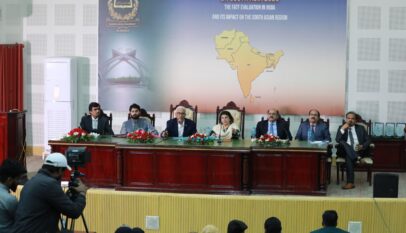


In the present global landscape, the establishment of peace has become an increasingly complex and formidable challenge, particularly in South Asia—a region often marked by political tensions, border disputes, and competing interests of global powers. In such circumstances, Pakistan has not only taken serious steps to strengthen its internal stability but has also played a responsible, balanced, and proactive role in promoting peace and security across the region.
Pakistan’s foreign policy has consistently been rooted in the principles of peace, dialogue, and mutual respect. The country has made several sincere and constructive efforts to improve relations with its neighboring states. In particular, Pakistan’s role in Afghanistan has been both significant and commendable. Despite decades of instability, Pakistan has acted as a key facilitator in the Afghan peace process, helping bring various stakeholders to the negotiating table and working alongside the international community to pursue a sustainable and peaceful resolution.
Pakistan’s sacrifices in the fight against terrorism are unparalleled. The country’s security forces, law enforcement agencies, and citizens have made immense sacrifices to restore peace within the nation. Operations such as Zarb-e-Azb and Radd-ul-Fasaad not only dismantled terrorist networks but also set a practical example for the world on how a coordinated strategy and national resolve can effectively combat extremism and restore stability.
On the global stage, Pakistan has also made significant contributions to the promotion of peace. The active participation of Pakistani armed forces in United Nations peacekeeping missions reflects the country’s strong commitment to international peace and security. In various conflict-affected regions, Pakistani peacekeepers have demonstrated professionalism, discipline, and humanitarian spirit while contributing meaningfully to peacebuilding efforts.
Furthermore, Pakistan has consistently emphasized peaceful and diplomatic solutions to the Kashmir dispute. It maintains that lasting peace in the region cannot be achieved without the just resolution of longstanding conflicts in accordance with international laws and principles.
In the realm of economic and regional cooperation, Pakistan has undertaken important initiatives aimed at fostering peace. Projects like the China-Pakistan Economic Corridor (CPEC) have the potential to enhance connectivity, promote economic growth, and bring prosperity not only to Pakistan but to the entire region—ultimately contributing to long-term peace and stability.
It is evident that peace is not merely the absence of war; it requires justice, economic development, social stability, and mutual trust. Pakistan has adopted a balanced, realistic, and forward-looking strategy while keeping all these factors in view. If the international community and regional countries cooperate with the same spirit, South Asia can be transformed into a peaceful, stable, and prosperous region.
In conclusion, Pakistan’s consistent policies, immense sacrifices, and sustained diplomatic efforts have established it as a key contributor to regional peace. Its role is not only commendable but also serves as a guiding example for other nations striving for peace and stability.
If you want, I can also convert this into a short editorial, headline-focused news version, or a more powerful opinion piece for publication.