
By Laraib Hashmi
We’ve all been there. You pick up your phone just for a minute, start scrolling, and suddenly you’re looking at friends on vacation, someone celebrating a promotion, or a gathering you didn’t even know about. And quietly, almost without warning, a thought creeps in, “Am I missing out?”
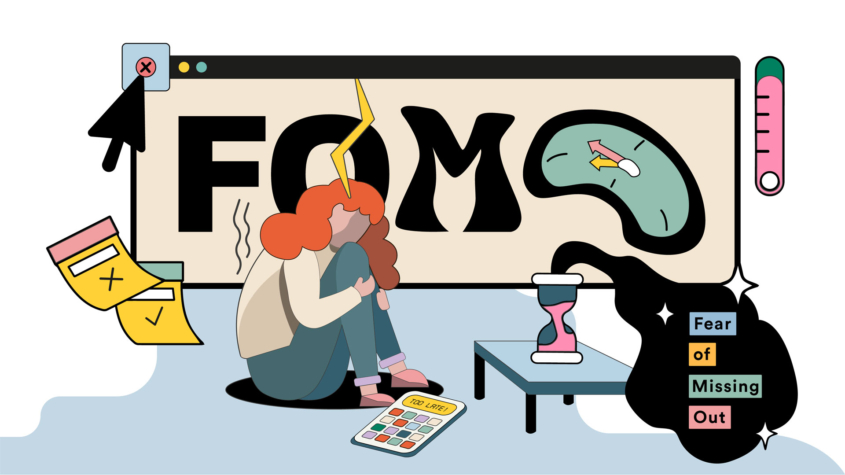
This feeling, known as FOMO (Fear of Missing Out), has become a very real part of our lives. It’s not just a passing emotion anymore; it’s something that can sit with us, affect our mood, and even shape how we see ourselves. At its heart, FOMO is the worry that others are experiencing something better, more exciting, or more meaningful than we are, and that we’re somehow being left behind.
What makes FOMO so powerful is comparison. We start measuring our lives against what we see others doing. But the truth is, this comparison is never fair. We’re comparing our everyday reality with someone else’s highlight reel. No matter how much we achieve, there will always be someone who seems to have more, and that can leave us feeling like we’re not doing enough, or worse, that we’re not enough.
Part of the problem is how we unknowingly simplify the world in our minds. It starts to feel like there are only two groups: us and everyone else. And somehow, everyone else always seems happier, more successful, or more fulfilled. But that’s not reality, it’s just the version we see through screens.
Social media has made this feeling stronger than ever. In the past, we might hear about someone’s success days or weeks later. Now, we see everything as it happens, in real time. Every celebration, every achievement, every moment is right there in front of us. And because people naturally share the best parts of their lives, it creates an illusion that life is perfect for everyone else.
Research backs this up. FOMO isn’t just in our heads, it has real effects on mental health. It’s been linked to anxiety, low mood, and even a drop in overall life satisfaction. And here’s the tricky part, the more we feel FOMO, the more we turn to social media to check what we’re missing, which only makes the feeling stronger. It’s a loop that’s hard to break.
What’s even more surprising is that FOMO doesn’t just affect young people anymore. While it started with teenagers and young adults, people of all ages now experience it. Whether it’s missing out on family time, career opportunities, or life experiences, that same uneasy feeling can follow anyone.
So why does it hit us so deeply? Part of it is human nature. We tend to focus more on what we don’t have rather than what we do. There’s also uncertainty, we don’t even know exactly what we’re missing, but our minds imagine it as something important. And then there’s the fear of loss. Missing out, even on something small, can feel bigger than it actually is.
But the good news is, FOMO doesn’t have to control us. The first step is simply being aware of it. Reminding ourselves that social media isn’t the full picture can make a big difference. Taking breaks from screens, focusing on our own goals, and appreciating what we already have can slowly shift our mindset.
At the end of the day, life isn’t a race where everyone is competing for the same experiences. It’s a personal journey. Everyone moves at their own pace, with their own struggles and victories, most of which we never see online.
And maybe, instead of worrying about what we’re missing, we can start paying more attention to what we already have. Because sometimes, the moment we’re living right now is enough, we just need to notice it.