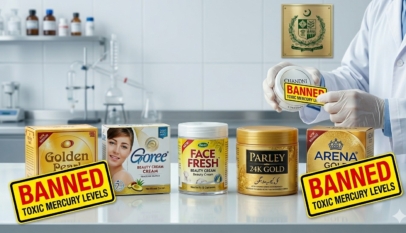

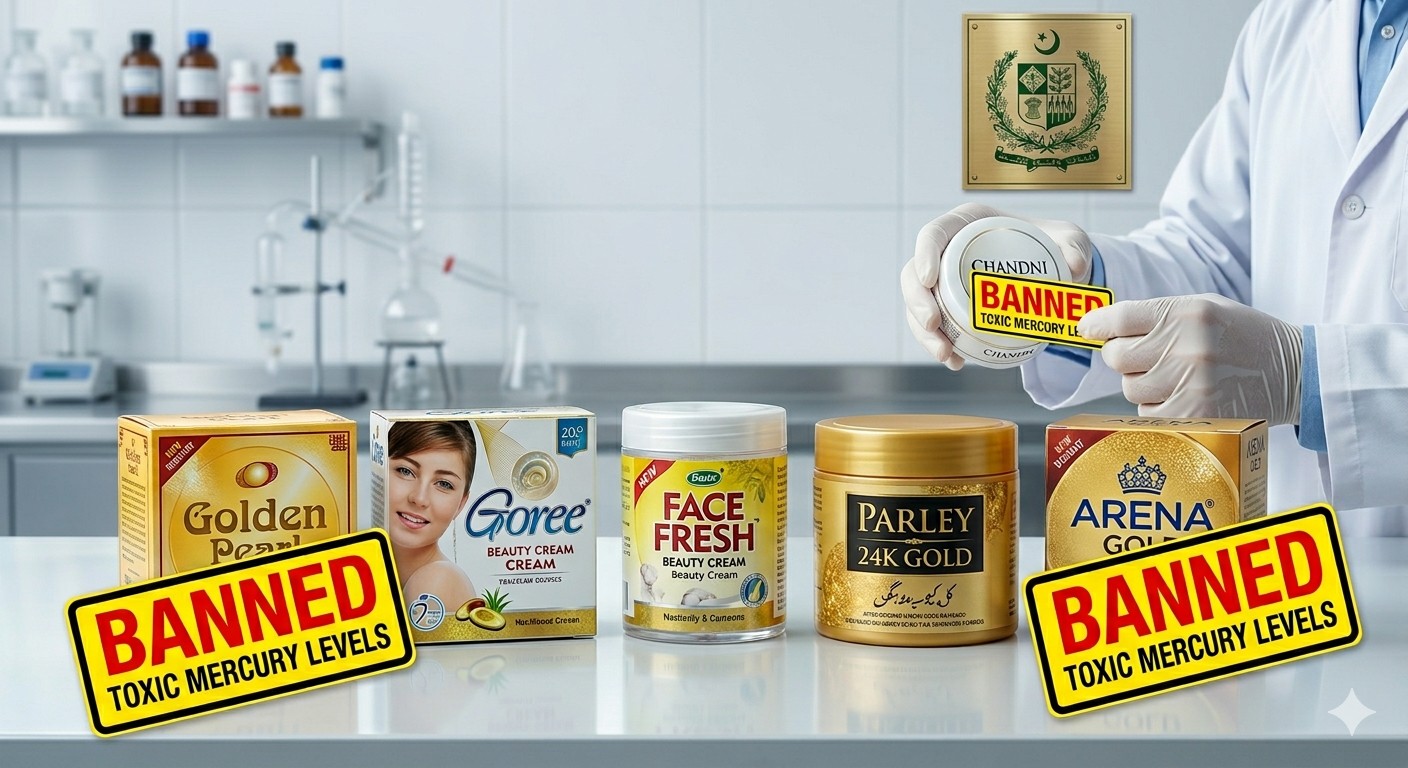
In a major move to protect public health, the Government of Pakistan has officially banned the manufacturing, sale, and stocking of six popular beauty cream brands. The crackdown comes after rigorous laboratory testing revealed that these products contain “outrageous” levels of toxic substances, including mercury and arsenic, which pose severe risks to consumers.
The Pakistan Standards and Quality Control Authority (PSQCA) suspended the licenses of these household names following a market surveillance operation. The findings have sparked a wider debate regarding the enforcement of international safety conventions in the country.
The Banned Brands: Who is on the List?
According to the official notification and a briefing by the Minister for Science and Technology, Khalid Hussain Magsi, the brands that failed to meet the Pakistan Standard Specification 3228-2025 include:
- Golden Pearl Beauty Cream
- Goree Beauty Cream (including Day & Night and Lycopene variants)
- Face Fresh Beauty Cream
- Parley 24K Gold Beauty Cream
- Arena Gold Beauty Cream
- Chandni Day & Night Whitening Cream
While these six have faced immediate license suspension, other brands like Due, Sandal, and Zoya Gold have also been flagged in independent reports for containing mercury levels far exceeding international safety limits.
The Toxic Truth: Mercury and Arsenic Contamination
The samples were analyzed by the Pakistan Council of Scientific and Industrial Research (PCSIR). The results were alarming: some products contained mercury levels as high as 33,970 parts per million (ppm). For context, the global safety limit under the Minamata Convention—which Pakistan has ratified—is just 1 ppm.
Beyond mercury, the tests detected:
- Arsenic: A heavy metal known to cause skin lesions and increase the risk of cancer.
- Microbiological Contamination: Indicating poor hygiene during the manufacturing process.
Medical experts warn that mercury in skin-lightening products is absorbed through the skin and can lead to kidney damage, skin rashes, scarring, and even nervous system disorders. It also poses a significant threat to pregnant women and young children in the household who may come into contact with the user.
International Pressure and Enforcement Gaps
The ban follows a stinging report from the EcoWaste Coalition, a Manila-based environmental watchdog. The group recently purchased 20 Pakistani-made beauty products and found that 18 of them were “mercury-laced” way beyond the 2020 global phase-out deadline.
Environmental advocates argue that while the government has issued a ban, enforcement remains the biggest challenge. Many of these products continue to be sold openly in local markets and through online e-commerce platforms.
Government Action and Consumer Advice
The PSQCA has stated that the licenses will remain suspended until the manufacturers can prove their products are compliant with national safety standards. Continuous market monitoring is reportedly underway to ensure these “toxic” creams are removed from shelves.
What should consumers do?
- Immediate Cessation: Stop using any of the banned products immediately.
- Consult a Dermatologist: If you have used these creams for a long period and notice skin thinning or irritation, seek professional medical advice.
- Verify Certifications: Only purchase cosmetic products that carry the PSQCA certification mark and have a clear list of ingredients.
The Ministry of Science and Technology has reiterated its commitment to cleaning up the cosmetics industry, noting that the health of the citizens—particularly women who are the primary targets of these fairness products—cannot be sacrificed for profit.