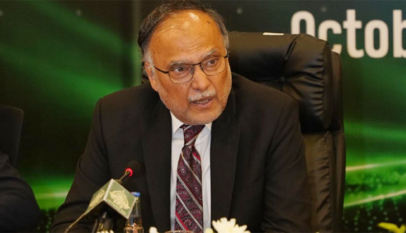

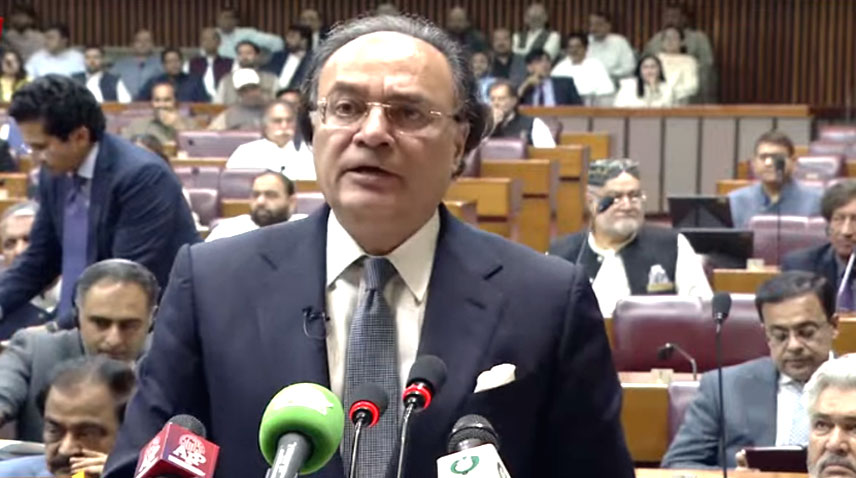
Federal Finance Minister Muhammad Aurangzeb on Tuesday presented Pakistan’s federal budget worth Rs18.771 trillion, outlining the government’s economic priorities for the upcoming fiscal year with an emphasis on growth, fiscal stability, infrastructure development and defence.
Presenting the budget in the National Assembly, the finance minister thanked coalition partners and described it as an honour to present the government’s third budget. He highlighted improvements in the country’s economic indicators, stating that Pakistan’s economy has reached an estimated size of $452 billion, while per capita income has increased from $1,751 to $1,901.
The government projects economic growth of 4% in the next fiscal year, with average inflation expected at 8.2%. Pakistan’s foreign exchange reserves have risen to more than $17 billion, compared with around $4 billion three years ago, while annual remittances are expected to exceed $41 billion.
The budget allocates Rs3 trillion for defence, making it one of the government’s top spending priorities. Debt servicing has been allocated Rs8.054 trillion, while Rs1 trillion has been earmarked for the federal Public Sector Development Programme (PSDP).
The government also proposed 7% increases in salaries and pensions for public sector employees and retirees, along with a 10% increase in the minimum monthly wage.
In taxation measures, relief has been proposed for salaried individuals across several income brackets, including reduced tax rates and the abolition of a 9% surcharge on salaried taxpayers. The government has also proposed reducing withholding taxes on property purchases and sales for filers and lowering export-related taxes.
Small businesses with annual sales below Rs200 million would be eligible for a new fixed tax regime, paying 1% of annual sales under simplified compliance rules.
The budget proposes removing taxes on sanitary pads and contraceptive products to support women’s health. It also seeks to continue tax incentives for the IT sector by extending the 0.25% final tax regime on IT export income for another three years.
Significant funding has been allocated for infrastructure and development projects, including:
- Rs100 billion for upgrading the Karachi–Chaman N-25 highway.
- Rs30 billion for the Sukkur–Hyderabad Motorway.
- Rs25 billion to begin work on the Karachi–Rohri section of the ML-1 railway project.
- More than Rs103 billion for 43 water projects, including allocations for the Diamer-Bhasha, Mohmand and Dasu dams.
The government has also proposed Rs838 billion for the Benazir Income Support Programme (BISP), a 17% increase from the previous year, and substantial funding for health, higher education, affordable housing and renewable energy initiatives.
Additionally, the Finance Bill proposes a 5% withholding tax on income earned through social media platforms, applicable when payments are received into an account by resident or non-resident individuals and entities earning through such platforms.
The budget will now be debated in Parliament before final approval.