
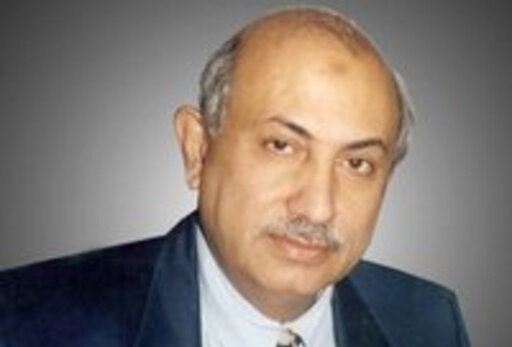
On the 24th of March, 2008, a quiet but profound void opened in the intellectual landscape of Pakistan. The passing of Dr. Abdul Razzaq Kemal was not merely the loss of a distinguished economist; it was the departure of a man who served as the nation’s economic conscience for nearly four decades. In the immediate aftermath, newspapers, policymakers, and academics across the country paid rich tributes to a voice that had guided the Planning Commission and the Ministry of Finance through some of their most turbulent eras.
Yet, as the years have turned into decades, a troubling and quiet reality has emerged: the memory of Dr. Kemal, like many intellectual giants in Pakistan, is gradually fading from the public consciousness. This fading is not just a disservice to his name; it reflects a deeper national issue, our tendency to overlook those who shape ideas, build institutions, and guide policy without ever seeking the spotlight. Dr. Kemal was a man who shaped the very framework of Pakistan’s economic policy, not for the sake of fame, but out of a deep-seated conviction that sound research is the only sustainable path to national development.
The Roots of a Leader: From Amritsar to Hafizabad
To understand the economist, one must first understand the man. Born on April 14, 1946, in Amritsar, India, shortly before the partition, his family eventually settled in the small city of Hafizabad. It was here, in the heart of Punjab, that the foundations of his character were laid.
In his youth, those close to him saw the spark of leadership early on. Interestingly, within his family, he was affectionately nicknamed “Quaid-i-Azam.” While some joked it was because of his physically thin frame, reminiscent of Muhammad Ali Jinnah, the elders knew better. They recognized a precocious leadership quality and a sense of responsibility that far outpaced his years.
Dr. Kemal was a “top-most” student throughout his academic career, but he was never the type to hoard knowledge. In Hafizabad, he became a magnet for fellow students. Whether it was complex mathematics or the foundations of science, his home was always open. He possessed a natural gift for simplifying the complex, a trait that would later define his professional life as he translated abstract economic data into actionable policy for the government.
His journey took him from Government College Gujranwala to Murray College Sialkot, where he was fortunate to study under world-class faculty, including the famous Dutch economist Professor Hank Thomas. This exposure to international perspectives early in his life planted the seeds for his future global engagements.
The Pursuit of Excellence: Stanford and Manchester
Dr. Kemal’s thirst for knowledge eventually led him away from the familiar streets of Pakistan to some of the world’s most prestigious academic halls. He earned his Master of Arts in Economics from Stanford University in 1972, followed by a PhD from the University of Manchester in 1978.
For many, such high-profile credentials are a ticket to a lucrative international career. For Dr. Kemal, they were a debt he owed to his homeland. He returned to Pakistan not as a distant academic, but as a practitioner. He brought with him a global understanding of macroeconomics but remained deeply rooted in the local realities of Pakistan’s markets, labor force, and rural struggles.
The PIDE Era: Building an Intellectual Fortress
If there is one institution that bears the indelible mark of Dr. Kemal’s soul, it is the Pakistan Institute of Development Economics (PIDE). Joining as a young staff economist in 1969, his career at PIDE spanned nearly forty years, culminating in his tenure as Director from 1999 to 2006.
Under his leadership, PIDE was transformed. He didn’t just manage the institute; he infused it with a culture of “academic integrity.” He was a fierce advocate for the idea that a nation’s policy must be grounded in home-grown research. He didn’t believe in “parachute solutions” imported from the West without local context.
As Director, he was instrumental in PIDE’s evolution into a degree-awarding university. He knew that for Pakistan to achieve economic sovereignty, it needed a steady stream of highly trained, ethically grounded economists. He mentored hundreds of young researchers, many of whom now hold senior positions in global financial institutions and government bodies. His door was famously “always open”—a rarity for a man of his stature. Whether it was a junior researcher struggling with a data set or a senior official seeking advice, Dr. Kemal made time.
The Architect of Policy: Balancing Growth with Grace
Dr. Kemal’s influence extended far beyond research papers. He was a “hands-on” architect of the Pakistani economy, serving in high-stakes roles including:
• Chief Economist of the Planning Commission.
• Member of the Planning Commission.
• Joint Economic Adviser at the Ministry of Finance.
In these roles, he faced the unenviable task of navigating Pakistan through various economic cycles. He was a man of the “middle path.” He recognized that while trade liberalization and privatization were necessary for modernization, they could be devastating if not managed with a social safety net.
He was one of the first major voices to emphasize the Urban Informal Sector. He recognized that millions of Pakistanis lived and worked in an “invisible” economy that traditional models ignored. His research on poverty alleviation wasn’t just about numbers; it was about the dignity of the Pakistani worker. He authored and co-authored 12 books and over 200 research articles, covering everything from agricultural taxation to child labor and exchange rate fluctuations.
A Global Ambassador with a Local Heart
His expertise was so profound that it couldn’t be contained within national borders. He became a sought-after consultant for the World Bank, the Asian Development Bank (ADB), UNDP, UNICEF, and the International Labour Organization (ILO). He represented Pakistan at the WTO and was a member of the restructuring committee for the Islamic Development Bank.
Yet, despite his international stature and the “Sitara-e-Imtiaz” awarded to him by the government, he remained the same humble man from Hafizabad. He was a regular on national radio and television, not because he sought fame, but because he believed the public deserved to understand the economic forces shaping their lives. He had a legendary ability to explain the national budget or inflation in terms that a common shopkeeper could understand.
The Quiet Humility of a Giant
On a personal level, Dr. Kemal was a man of diverse interests. Those who worked with him at PIDE remember him reviving the “Rachna Cricket Club.” He was an all-rounder on the pitch, bringing the same focus to a weekend cricket match that he brought to a Ministry of Finance meeting.
He was a man who “owned no foes.” In the often-vicious world of bureaucracy and academia, Dr. Kemal was a rare bridge-builder. He spoke softly but with the authority of deep knowledge. He never sought positions; instead, positions sought him. When he retired, he didn’t stop working. He continued to teach at LUMS, Quaid-i-Azam University, and Fatima Jinnah Women University. He believed that the “path of learning” only ended when life did.
Why We Must Remember
Today, Pakistan faces economic challenges that seem more daunting than ever—soaring inflation, structural debt, and a widening gap between the rich and the poor. In times like these, we often look for “heroes” in the political arena, but the real solutions lie in the intellectual rigor practiced by men like Dr. Kemal.
We are losing the memory of our thinkers. Our public discourse is dominated by the loud and the temporary. But a nation that forgets its intellectual architects is like a ship that has lost its rudder.
Dr. Kemal’s legacy is not just a collection of books in a library; it is a call to action. It is a reminder that:
- Research Matters: Policy without data is just a guess.
- Equity is Essential: Growth that leaves the poor behind is not true growth.
- Institutions Over Individuals: We must build organizations like PIDE that outlast any single leader.
An Investment in the Future
Remembering Dr. A. R. Kemal is not an act of nostalgia. It is an investment in the future of Pakistan. We must bring his work back into our university curricula. We must name our research halls after him, not just to honor him, but to inspire the 20-year-old student who is currently sitting in a classroom, wondering if they can make a difference.
Dr. Kemal was a mentor, a teacher, a guide, and a father. His life proved that one could reach the highest echelons of global power while remaining deeply committed to the soil that raised them.
As we navigate the complexities of the 21st century, the work of Dr. A. R. Kemal remains more relevant than ever. He taught us how to think, how to build, and how to serve. It is time we paid him the tribute he truly deserves: by listening once again to the wisdom he left behind.
Because nations that forget their thinkers risk losing not just their history, but their direction. Dr. Kemal gave Pakistan a direction it is up to us to keep following it.